
When you need reliable cryogenic transfer, a Vacuum Insulated Pipe is the go-to choice. It's built with a low-conductivity structure, reflective insulation, and a high-vacuum annular space that all work together to keep heat out. At HL Cryogenics, we design every system to cut down on liquid boil-off, manage two-phase flow, keep temperatures steady, and boost transfer efficiency for LNG, liquid nitrogen, liquid oxygen, liquid argon—pretty much any cryogenic media you're working with.
But there’s more to performance than just the pipe itself. You have to think about vacuum stability, supports, joints, valves, flexible connections, phase-control devices, and all the thermal details throughout the whole setup. We don’t treat these as separate pieces—our Dynamic Vacuum Pump System, Vacuum Insulated Valve, Flexible Hose, and Phase Separator are engineered to function together as a unified system.
For engineers and buyers, the result is clear—less heat loss, consistently stable cryogenic delivery, reduced waste, and a system you can count on year after year. That matters whether you’re running an industrial gas facility, building LNG infrastructure, supporting semiconductor manufacturing, or handling any demanding cryogenic installation. It’s all about efficiency and reliability, right where you need it most.

Phase Separator

Vacuum Insulated Pipe

Vacuum Insulated Flexible Hose

Vacuum Insulated Shut-off Valve
Table of Contents
1. Heat Transfer, Vacuum Performance, and Cryogenic Pipe Design
2. Maintaining Vacuum Integrity and Controlling Cryogenic Flow
3. System Integration: From LNG Terminals to Semiconductor Facilities
4. Designing for Long-Term Thermal Efficiency and Reliability
Heat Transfer, Vacuum Performance, and Cryogenic Pipe Design
When you're working with cryogenic temperatures, even a single watt of stray heat can throw everything off. Heat sneaks into the inner line in three ways: it travels through solid connections and supports, radiates across the gap, or slips in via leftover gas. Most standard insulated pipes just handle the conduction part, but a well-designed Vacuum Insulated Pipe tackles all three. We build in a vacuum jacket to choke off gas conduction, use precise internal supports to cut down on heat traveling through solids, and pack in the right multilayer insulation to fight off radiation.
Honestly, the goal isn’t just to keep things cold—it’s to deliver reliable heat leak control everywhere: straight runs, elbows, valves, branches, bayonet joints, you name it. Every possible thermal bridge gets attention. Material choice matters, too. Austenitic stainless steels are favorites because they stay strong at low temperatures, resist corrosion, weld easily, and play nice with cryogenic fluids.
And you can't ignore how the inner pipe and outer jacket shrink differently when things get cold. If you do, you’ll find trouble during stress analysis and routing. Depending on what’s flowing, the pressure you need, pipe size, and project code, our engineers configure systems for both low-pressure liquid movement and tough, high-pressure jobs. Project specs often go up to 10–20 bar, sometimes higher if needed.
Sometimes you need flexibility—a Vacuum Insulated Flexible Hose fits where rigid pipes just won’t work, whether it’s equipment movement, tight installation spots, vibration, or tricky layouts. The bottom line? Great vacuum insulation depends on sharp mechanical, thermal, and vacuum design working together, not just piling on more insulation.
Maintaining Vacuum Integrity and Controlling Cryogenic Flow
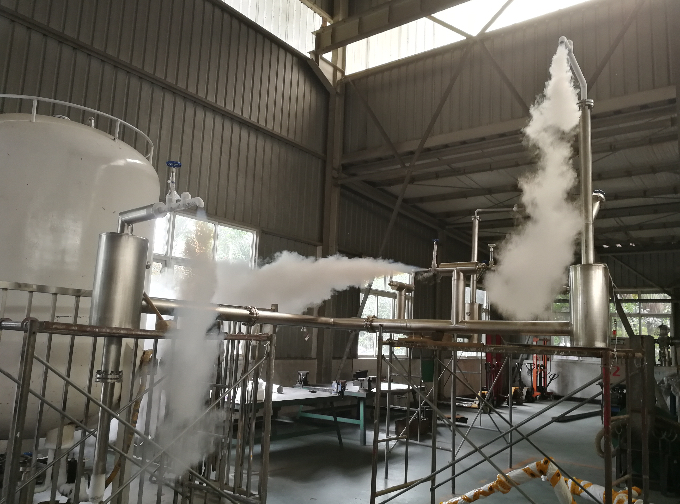
Keeping a strong vacuum over time makes all the difference in how well a vacuum-insulated cryogenic transfer system performs. Even if you build the annular space perfectly, pressure still creeps up over time—thanks to things like material outgassing, tiny leaks, maintenance, or even just microscopic permeation. That’s exactly why we rely on our Dynamic Vacuum Pump System. It keeps the vacuum alive by actively pulling out gas, any time the system needs to maintain or recover vacuum levels. You’re not stuck with whatever vacuum you had when it left the factory—if conditions change or something happens, the system brings the vacuum right back up, so your thermal performance stays consistent for as long as you’re operating.
This really pays off for bigger setups—think long transfer lines, heavily used systems, or any operation where more heat leaking in means losing money to boil-off. But it’s not only about the vacuum space. Flow-control parts deserve attention, too. A bare, uninsulated valve acts as a thermal bridge, and all that cold you’ve paid for goes right out the window. So, we use a Vacuum Insulated Valve, which extends vacuum protection right through the valve itself, while still delivering reliable isolation and flow control.
Sometimes, you’ll run into flash gas or two-phase flow. Here, our Vacuum Insulated Phase Separator keeps things under control, splitting vapor from liquid before it reaches downstream equipment. That way, your liquid supply stays steady and you tame those annoying swings in pressure or temperature where the process needs it most.
If you have smaller or distributed needs, you can add a Mini Tank to your network—connecting it with pipes, hoses, valves, and phase control hardware. This creates a compact but effective supply system. Bring these elements together properly, and you get safer operation, less waste from unnecessary venting, and a cryogenic system that actually performs the way your process demands.
System Integration: From LNG Terminals to Semiconductor Facilities
Vacuum insulation really proves its worth when you look at the whole system, not just one piece. Picture this: in a busy semiconductor facility somewhere in East Asia, liquid nitrogen moves from an outdoor tank through a long pipeline to different production zones. If too much heat sneaks into that cryogenic line, some of the liquid nitrogen boils off before it even gets to where it’s needed. That means more gas forms, pressure levels get jumpy, and you end up delivering less actual liquid than planned.
Engineers approach this by checking everything: flow rates, pressures, pipe size, how the line twists and climbs, allowable pressure drops, equipment hookups, operating cycles, and how much heat they need to block out. The solution usually blends several components—vacuum insulated pipe spools along the main run, flexible vacuum insulated hoses at tricky points, a dynamic vacuum pump for spots that need constant vacuum, and a vacuum insulated phase separator close to the process tools.
This kind of setup isn’t just for liquid nitrogen. You see the same playbook at LNG terminals in Southeast Asia, gas plants across Europe, and new hydrogen projects in the Middle East. Sure, the details shift—materials, pressure ratings, how you join pieces, how you check them—but the same basic ideas apply.
Our engineering and manufacturing process runs under ASME, CE, and ISO certifications, so we can build cryogenic equipment to meet whatever standards a project calls for anywhere—from ASME and EN to all the latest ISO frameworks. If you’re an EPC contractor, you know this isn’t just about picking the right pipe size. The piping package has to mesh with all the project documents and requirements: specs, pressure equipment codes, QA/QC, welding and NDT standards, material tracking, and the way things get installed on site. That’s how a system comes together.

Designing for Long-Term Thermal Efficiency and Reliability
The most efficient cryogenic system isn’t just the one with the lowest up-front pipe cost. The real win is a setup that keeps heat leaks, pressure drops, vacuum integrity, liquid quality, and mechanical reliability all in check—year after year. At HL Cryogenics, we don’t look at Vacuum Insulated Pipe, cryogenic hose sections, valves, phase separators, vacuum hardware, or storage connections as standalone parts. We treat them as pieces of one interconnected thermodynamic puzzle.
If you’re on a procurement team, you know the right technical comparison goes way beyond price tags. You’ve got to look at design and operating pressures, what process medium you’re dealing with, temperature specs, materials for both the inner and outer pipes, the vacuum rating, insulation design, measured or calculated heat leak, connection type, pressure drop limits, inspection needs, and the right engineering standards. On the engineering side, details like routing and installation make a massive difference. Too many field joints, supports in the wrong places, too much flexible piping, or ignoring thermal contraction can ruin even the best design.
Your application might be a liquid nitrogen feed for chip manufacturing, a big LNG setup, industrial gas lines, a science facility, or something hydrogen-related. Doesn't matter. We’ll tailor the whole package—Vacuum Insulated Pipe, Flexible Hose, Dynamic Vacuum Pumps, Insulated Valves, Phase Separators, and Mini Tanks—to your exact process needs.
So, send us your flow rates, pressures, pipe sizes, layouts, process conditions, and any standards you have to meet. Our engineering team will dive in and help you build the right cryogenic transfer solution for your project.
● FAQS
Since 1992, HL Cryogenics has specialized in the design and manufacturing of high-vacuum insulated cryogenic piping systems and related support equipment, tailored to meet diverse customer needs. We hold ASME, CE, and ISO 9001 certifications, and have provided products and services to many well-known international enterprises. Our team is sincere, responsible, and committed to excellence in every project we undertake.
Vacuum Insulated/Jacketed Pipe
Vacuum Insulated/Jacketed Flexible Hose
Phase Separator / Vapor Vent
Vacuum Insulated (Pneumatic) Shut-off Valve
Vacuum Insulated Check Valve
Vacuum Insulated Regulating Valve
Vacuum Insulated Connectors for Cold Boxes & Containers
MBE Liquid Nitrogen Cooling Systems
Other cryogenic support equipment related to VI piping — including but not limited to safety relief valve groups, liquid level gauges, thermometers, pressure gauges, vacuum gauges, and electric control boxes.
We are happy to accommodate orders of any size — from single units to large-scale projects.
HL Cryogenics' Vacuum Insulated Pipe (VIP) is manufactured in accordance with the ASME B31.3 Pressure Piping Code as our standard.
HL Cryogenics is a specialized vacuum equipment manufacturer, sourcing all raw materials exclusively from qualified suppliers. We can procure materials that meet specific standards and requirements as requested by customers. Our typical material selection includes ASTM/ASME 300 Stainless Steel with surface treatments such as acid pickling, mechanical polishing, bright annealing, and electro polishing.
The size and design pressure of the inner pipe are determined according to the customer's requirements. The size of the outer pipe follows HL Cryogenics' standard specifications, unless otherwise specified by the customer.
Compared with conventional piping insulation, the static vacuum system provides superior thermal insulation, reducing gasification losses for customers. It is also more cost-effective than a dynamic VI system, lowering the initial investment required for projects.
● Related Posts



Post time: Sep-28-2026


