
We evaluate engineering capability, vacuum insulation performance and long-term system stability under the actual operating conditions of EPC to select a reliable cryogenic equipment supplier. "In practice, we prefer suppliers that can provide complete, integrated cryogenic transfer systems, not just components, with proven performance for industrial gas, LNG and semiconductor use, he said.
For EPC projects, the selection of suppliers is a system engineering decision and not a procurement comparison. A technically competent supplier must show that he has control of heat leak reduction, vacuum stability, mechanical integrity and lifecycle reliability on all cryogenic interfaces.
Supplier qualification is a system level engineering issue at HL Cryogenics. We look at the function of each of the parts of a complete cryogenic infrastructure, not as separate parts.
The dominant performance limitation of any cryogenic transfer system is heat ingress. Small amounts of thermal leakage cause excessive vaporising losses, pressure fluctuations and reduced system efficiency.
That’s why we manufacture and engineer Vacuum Insulated Pipe, Vacuum Insulated Flexible Hose, and Vacuum Insulated Valve assemblies with strict control of vacuum annular quality, multilayer insulation density, and stainless-steel thermal bridging reduction.
A cryogenic piping system, properly designed, can reduce the heat leak by more than 80-90% when compared to conventional insulated piping. It directly improves the stability of liquid nitrogen systems, the efficiency of LNG transfer and the accuracy of industrial gas delivery.
Our engineering teams measure thermal conductivity, vacuum decay rates and material contraction behaviour over operating ranges from -196°C (liquid nitrogen) to -253°C (liquid hydrogen).
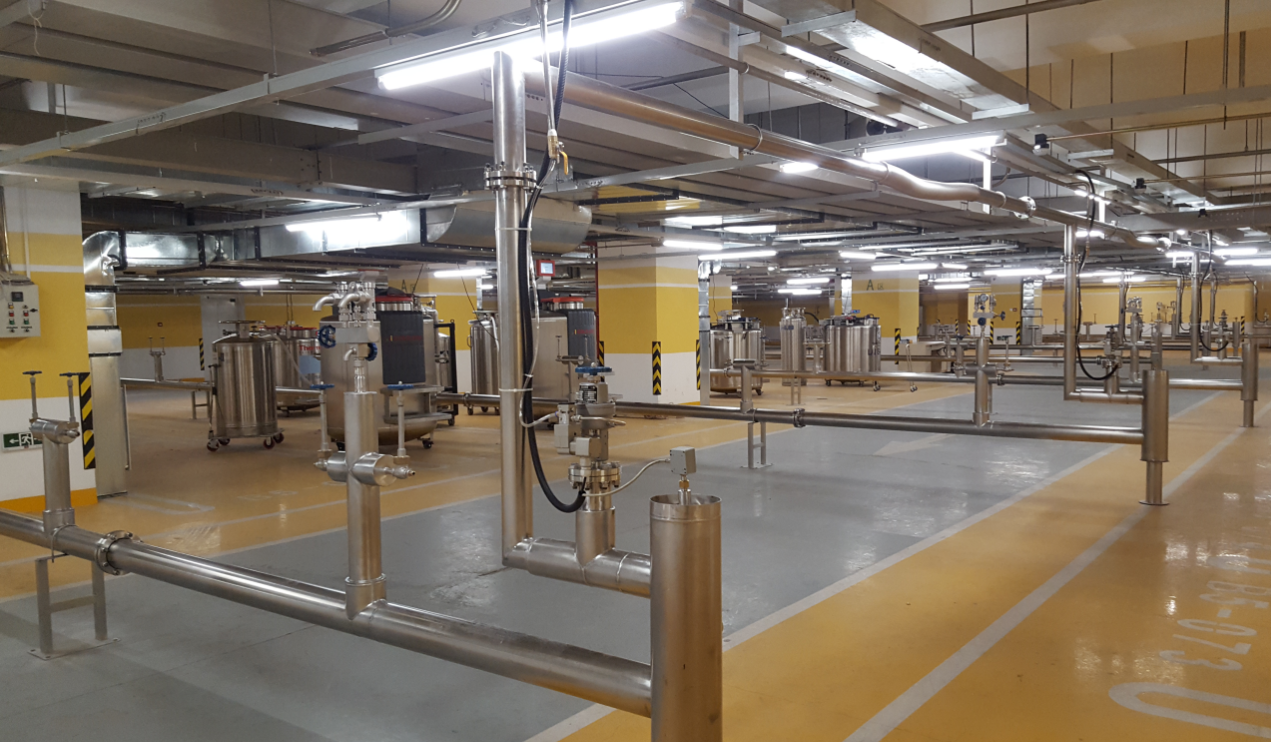
Table of Contents
1. Key Selection Criterion 1: Vacuum System Stability Over Time
2. Key Selection Criterion 2: System-Level Component Integration
3. Key Selection Criterion 3: Engineering Control of Phase Behavior
4. Key Selection Criterion 4: Compliance with Global Engineering Standards
● Key Selection Criterion 1: Vacuum System Stability Over Time
The big question with suppliers is simple: does the vacuum hold steady after startup, or not?
We rely on a Dynamic Vacuum Pump System to keep the vacuum strong in large cryogenic setups. Static systems just sit there, but dynamic pumping keeps working—chasing down micro-leaks, handling outgassing, and dealing with all the stress from thermal cycles.
With this approach, we actually keep vacuum levels below 10⁻³ mbar where it matters most. You get less heat leak drift, even years down the line. Plus, the reliability for continuous LNG operations and big gas networks really goes up.
For EPC projects, this means fewer maintenance shutdowns. Over time, the whole operation runs smoother and costs less.
● Key Selection Criterion 2: System-Level Component Integration

By combining our Dynamic Vacuum Pump System, Vacuum Insulated Valve, and Phase Separator, we give you a setup that moves liquid helium efficiently and keeps costs down. Our Mini Tanks and Flexible Hoses let us handle both mobile and fixed jobs with precision.
Cryogenic systems work best as a coordinated network, not a bunch of parts doing their own thing.
We bring together Vacuum Insulated Pipe, Flexible Hose, and Vacuum Insulated Valve into one integrated setup that keeps pressure steady and manages phase changes.
The flexible hose plays a key role when equipment moves or vibrates and temperatures swing — it's tough enough to stay flexible while holding its vacuum, even after countless hot-cold cycles.
At critical control points, the Vacuum Insulated Phase Separator keeps liquid and vapor separated. That way, downstream gear like LNG vaporizers or semiconductor cooling systems avoid messy two-phase flow and stay stable.
● Key Selection Criterion 3: Engineering Control of Phase Behavior
Phase instability is a big headache in cryogenic engineering, especially when it comes to EPC operations.
That’s where our Vacuum Insulated Phase Separator steps in. This piece of equipment keeps the liquid delivery steady by stopping vapor from sneaking into the mix—even when inlet pressure jumps around anywhere from 0.3 to 1.6 MPa, depending on how the system’s set up.
You’ll see why this matters in places like semiconductor fabrication (MBE, etching, wafer cooling), LNG regasification terminals, and liquid nitrogen dosing in food and beverage production.
With reliable phase separation, you get a predictable mass flow and that has a direct impact on process yield and safety compliance. It’s about keeping things running smoothly and safely.

● Key Selection Criterion 4: Compliance with Global Engineering Standards
To be taken seriously as a cryogenic supplier, you’ve got to show you actually meet international codes.
At HL Cryogenics, we don’t cut corners. We build everything to ASME standards for pressure equipment, follow EN rules for European EPC integration, and stick to ISO systems for quality and welding. That means our equipment plays nicely with EPC contractors in Europe, Southeast Asia, and the Middle East—those places where engineering validation has to meet tough, cross-border requirements.
Here’s what happened on an LNG infrastructure project in Southeast Asia. They needed a steady liquid nitrogen supply for their pre-cooling setup. But their EPC contractor ran into big headaches: pressure swings and too much boil-off, all because the insulation from their old, pieced-together piping just didn’t cut it.
We came in and swapped out the system for something solid: a fully integrated setup with Vacuum Insulated Pipe, Flexible Hose, and Phase Separator—all backed by a Dynamic Vacuum Pump System to keep the vacuum stable over time.
The results were clear. Heat leak dropped by about 85%. Pressure stayed steady, within ±0.05 MPa. Maintenance? Cut way back, right from the first cycle.
Really, this shows that system-level engineering is what drives EPC success—not just swapping out individual parts.
● FAQ
Since 1992, HL Cryogenics has specialized in the design and manufacturing of high-vacuum insulated cryogenic piping systems and related support equipment, tailored to meet diverse customer needs. We hold ASME, CE, and ISO 9001 certifications, and have provided products and services to many well-known international enterprises. Our team is sincere, responsible, and committed to excellence in every project we undertake.
Vacuum Insulated/Jacketed Pipe
Vacuum Insulated/Jacketed Flexible Hose
Phase Separator / Vapor Vent
Vacuum Insulated (Pneumatic) Shut-off Valve
Vacuum Insulated Check Valve
Vacuum Insulated Regulating Valve
Vacuum Insulated Connectors for Cold Boxes & Containers
MBE Liquid Nitrogen Cooling Systems
Other cryogenic support equipment related to VI piping — including but not limited to safety relief valve groups, liquid level gauges, thermometers, pressure gauges, vacuum gauges, and electric control boxes.
We are happy to accommodate orders of any size — from single units to large-scale projects.
HL Cryogenics' Vacuum Insulated Pipe (VIP) is manufactured in accordance with the ASME B31.3 Pressure Piping Code as our standard.
HL Cryogenics is a specialized vacuum equipment manufacturer, sourcing all raw materials exclusively from qualified suppliers. We can procure materials that meet specific standards and requirements as requested by customers. Our typical material selection includes ASTM/ASME 300 Stainless Steel with surface treatments such as acid pickling, mechanical polishing, bright annealing, and electro polishing.
The size and design pressure of the inner pipe are determined according to the customer's requirements. The size of the outer pipe follows HL Cryogenics' standard specifications, unless otherwise specified by the customer.
Compared with conventional piping insulation, the static vacuum system provides superior thermal insulation, reducing gasification losses for customers. It is also more cost-effective than a dynamic VI system, lowering the initial investment required for projects.
● Related Posts



Post time: May-22-2026


