
All cryogenic units offered and used in the European market need to have compulsory EU Pressure Equipment Directive (PED 2014/68/EU) CE approval and unified EN cryogenic technology specifications. Additional ISO quality and safety approvals are needed to confirm the performance of vacuum-insulated units, reliability of materials, and stable operation over time in industrial gases and LNG applications.
HL Cryogenics offers the design, fabrication, and CE certification of all our cryogenic products in accordance with European regulatory requirements, thereby ensuring reliable performance of all vacuum-insulated elements in any project.
All European cryogenic transfer system apparatus is required to have PED 2014/68/EU CE marking as a fundamental legal requirement. PED CE marking refers to mandatory certification required for all apparatus operating at pressures greater than 0.5 bar. All our products fall under PED regulation since nearly all our industrial cryogenic systems require operation at pressures greater than 0.5 bar.
Our core products include Vacuum Insulated Pipe, Vacuum Insulated Flexible Hose, Vacuum Insulated Valve, and Vacuum Insulated Phase Separator. These products require PED compliance concerning calculation, pressure testing, material traceability, and final conformity assessment of our products. Without PED CE marking, any installation of the cryogenic equipment within the European Union is illegal.
On top of PED regulations, there are other harmonized EN standards applicable to all our cryogenic engineering products. EN 12501 ensures that material standards are met to operate at very low temperatures in order to maintain product integrity. EN 13648 concerns safety devices for cryogenic installations while EN 10204 involves material test and certification.
In addition, all our cryogenic pipes and Mini Tanks are ISO 9001 certified, which means that our manufacturing processes conform to standard procedures that give consistency in vacuum insulation performance and proper fitting.
Table of Contents
1. Technical Certification Requirements for Vacuum Insulated Components
2. Material & System Integration Certification Standards
3. Procurement & Compliance Best Practices for European Projects
4. Conclusion
Technical Certification Requirements for Vacuum Insulated Components
Vacuum insulation sits at the heart of today’s most efficient cryogenic systems. In Europe, authorities don’t mess around—equipment that relies on a vacuum has to meet some tough certification standards. When you’re dealing with cryogenics, heat sneaks in three ways: conduction, convection, or radiation. Good vacuum insulation wipes out convective heat transfer completely, slashing heat leaks by more than 90%.
That’s where HL Cryogenics steps in. Our Dynamic Vacuum Pump System clears the bar for European vacuum stability standards. This system isn’t passive—it constantly pulls out any lingering gas from between the layers of our Vacuum Insulated Pipe and cryogenic hoses. That keeps the vacuum tight for the long haul. You don’t get insulation failure, you don’t lose liquid nitrogen to unwanted vapor, and your whole transfer system lasts longer because you’re not dealing with surprise breakdowns.
Take our Vacuum Insulated Valve. Every unit goes through no-nonsense low-temperature and pressure resistance tests to meet EN requirements. Standard industrial valves just can’t handle the cold—they leak and bleed off precious cold energy. Our valve keeps the vacuum locked in, gives you sharp control over flow, and hits every safety mark European industry expects for non-stop use.
Same story with our Vacuum Insulated Phase Separator. Certified for European standards, it keeps cryogenic fluids balanced between liquid and gas phases, so you don’t get nasty surges or pressure swings. That’s not just technical detail—it’s essential for safe, reliable LNG and liquid hydrogen systems all over Europe.
Material & System Integration Certification Standards
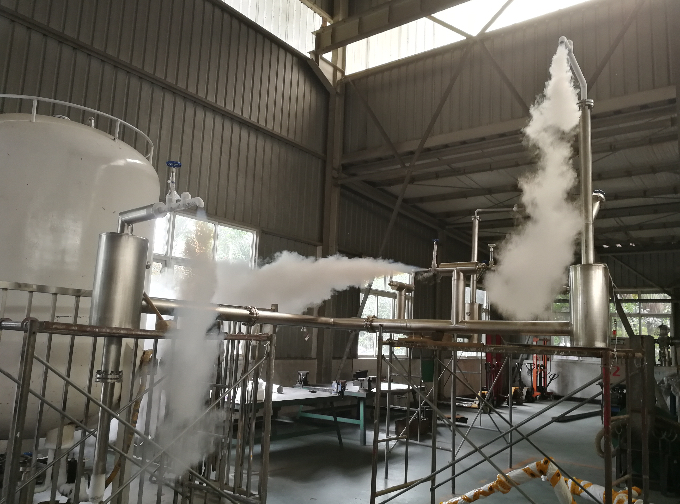
By combining our Dynamic Vacuum Pump System, Vacuum Insulated Valve, and Phase Separator, we give you a setup that moves liquid helium efficiently and keeps costs down. Our Mini Tanks and Flexible Hoses let us handle both mobile and fixed jobs with precision.
European certifiers really care about how materials hold up under tough, cold conditions and repeated stress—especially for cryogenic gear. That’s why we stick to PED-approved stainless steel and low-temp alloys when making our cryogenic pipes and Vacuum Insulated Flexible Hoses.
Every piece gets hit with cryogenic impact tests and pressure cycling checks, so we meet both EN and ASME standards. This double compliance means our equipment fits a wide range of projects—from gas plants in Europe to LNG terminals in Southeast Asia, and even hydrogen projects in the Middle East.
Certifying just parts isn’t enough for Europe; they want the whole cryogenic transfer system to pass integrated tests. So, we run pressure tests, check for vacuum leaks, and verify thermal efficiency on the entire system—not just individual components. At HL Cryogenics, we do all these pre-certification tests before shipping anything out, making sure installation goes smoothly and approvals happen fast.
Procurement & Compliance Best Practices for European Projects
If you’re an EPC contractor or procurement manager looking for European cryogenic equipment, you know solid documentation isn’t optional—it’s essential. We deliver everything you need: PED conformity declarations, EN test reports, ISO quality certificates, vacuum insulation data sheets—all packed into a complete certification file for every single project.
While most suppliers just certify individual parts, we go all the way and guarantee full system performance. When your compliance covers the full system, you skip the regulatory headaches and get your project approved faster. Plus, your setup stays reliable for industrial gas, LNG, or hydrogen.
Need standard cryogenic pipe assemblies? Custom Vacuum Insulated Phase Separator units? Maybe a compact Mini Tank? Whatever you’re after, we shape both the design and the certifications to fit local European regulations and your exact technical specs.
● Conclusion
European cryogenic system compliance centers on mandatory PED CE certification, harmonized EN cryogenic standards, and ISO quality validation, with strict technical requirements for vacuum insulation performance, material safety, and system integration. As a professional cryogenic engineering manufacturer, HL Cryogenics delivers fully certified, high-efficiency cryogenic equipment optimized for European industrial and energy projects.
If you need certified vacuum insulated cryogenic system solutions, customized engineering design, or full compliance documentation for your European project, feel free to contact our technical team for professional, tailored support.
● FAQS
Since 1992, HL Cryogenics has specialized in the design and manufacturing of high-vacuum insulated cryogenic piping systems and related support equipment, tailored to meet diverse customer needs. We hold ASME, CE, and ISO 9001 certifications, and have provided products and services to many well-known international enterprises. Our team is sincere, responsible, and committed to excellence in every project we undertake.
Vacuum Insulated/Jacketed Pipe
Vacuum Insulated/Jacketed Flexible Hose
Phase Separator / Vapor Vent
Vacuum Insulated (Pneumatic) Shut-off Valve
Vacuum Insulated Check Valve
Vacuum Insulated Regulating Valve
Vacuum Insulated Connectors for Cold Boxes & Containers
MBE Liquid Nitrogen Cooling Systems
Other cryogenic support equipment related to VI piping — including but not limited to safety relief valve groups, liquid level gauges, thermometers, pressure gauges, vacuum gauges, and electric control boxes.
We are happy to accommodate orders of any size — from single units to large-scale projects.
HL Cryogenics' Vacuum Insulated Pipe (VIP) is manufactured in accordance with the ASME B31.3 Pressure Piping Code as our standard.
HL Cryogenics is a specialized vacuum equipment manufacturer, sourcing all raw materials exclusively from qualified suppliers. We can procure materials that meet specific standards and requirements as requested by customers. Our typical material selection includes ASTM/ASME 300 Stainless Steel with surface treatments such as acid pickling, mechanical polishing, bright annealing, and electro polishing.
The size and design pressure of the inner pipe are determined according to the customer's requirements. The size of the outer pipe follows HL Cryogenics' standard specifications, unless otherwise specified by the customer.
Compared with conventional piping insulation, the static vacuum system provides superior thermal insulation, reducing gasification losses for customers. It is also more cost-effective than a dynamic VI system, lowering the initial investment required for projects.
● Related Posts



Post time: May-08-2026


