
Liquid hydrogen (LH₂) is used in applications where high energy density and extremely low temperatures are required, particularly in aerospace, hydrogen energy and cryogenic systems. Because liquid hydrogen boils at approximately -253°C (-423°F) at atmospheric pressure, controlling heat input during storage and transfer is one of the main challenges in LH₂ systems.
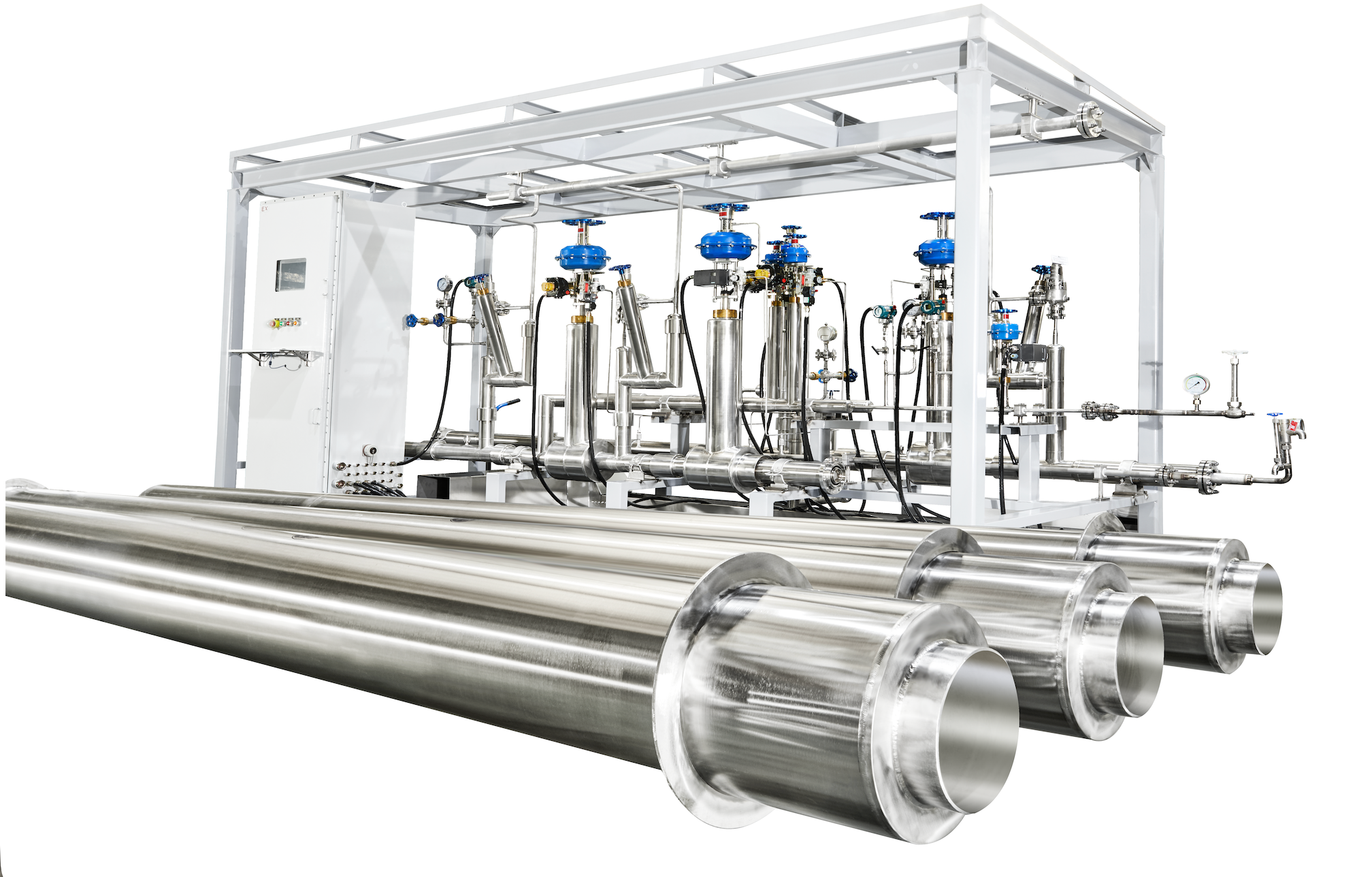
Vacuum insulated pipes (VIPs) provide an effective solution for transferring liquid hydrogen while limiting heat transfer from the surrounding environment. By using a vacuum space between the inner process pipe and the outer jacket, VIPs significantly reduce conductive and convective heat transfer and help maintain the required cryogenic conditions.
Temperature Control During Liquid Hydrogen Transfer
The extremely low boiling point of liquid hydrogen makes thermal management particularly important. Even a relatively small amount of heat entering the system can increase liquid evaporation and generate gaseous hydrogen.
A vacuum insulated pipe consists of an inner pipe carrying the cryogenic fluid and an outer jacket surrounding the pipe. The annular space between them is evacuated to a high vacuum, reducing heat transfer and minimizing the heat leak into the liquid hydrogen.
For LH₂ service, maintaining stable thermal performance is important not only for reducing product losses but also for controlling pressure and maintaining reliable operation of the transfer system. The design of the pipe, insulation system, materials and vacuum level all need to be considered together when developing an LH₂ piping system.
Applications in Hydrogen Energy Systems
The development of hydrogen infrastructure is creating new requirements for reliable cryogenic equipment. Liquid hydrogen can be used for storage and transportation where its high energy density by mass provides advantages over compressed hydrogen in certain applications.
VIPs can be used in different sections of an LH₂ system, including:
- Liquid hydrogen storage tank transfer lines
- Loading and unloading systems
- Cryogenic pumping systems
- Hydrogen refueling infrastructure
- Hydrogen production and liquefaction facilities
- Connections between storage and process equipment
Reducing heat leak in these systems can help limit hydrogen boil-off and improve the overall efficiency of liquid hydrogen handling.
For longer transfer lines, pipe configuration, support design, vacuum performance and thermal contraction also become important considerations. Proper system design is therefore required to maintain both mechanical integrity and cryogenic performance during operation.
Liquid Hydrogen Piping for Aerospace Applications
Liquid hydrogen has been used as a rocket propellant for decades, particularly in high-performance launch systems. Its low temperature and specific physical properties, however, require specialized cryogenic equipment throughout the fuel supply system.
Vacuum insulated piping can be used to connect LH₂ storage tanks, transfer equipment and launch-site systems. The insulation system helps reduce heat input during transfer and limits hydrogen boil-off before the propellant reaches the engine or other downstream equipment.
Aerospace applications also place demanding requirements on piping systems. In addition to thermal performance, factors such as material selection, cleanliness, leak tightness, vacuum integrity, thermal contraction and mechanical reliability must be considered during design and manufacturing.
Design Considerations for LH₂ Vacuum Insulated Pipes
Liquid hydrogen applications generally require more stringent design considerations than conventional cryogenic services such as liquid nitrogen or liquid oxygen.
Some of the key factors include:
Vacuum performance:
A stable high vacuum is required to maintain low heat transfer over the intended service life of the piping system.
Material selection:
Materials must remain suitable at temperatures approaching -253°C and withstand the associated thermal contraction and mechanical stresses.
Thermal contraction:
The significant temperature difference between ambient conditions and liquid hydrogen temperature can cause considerable dimensional changes. Pipe supports, connections and expansion arrangements need to account for these movements.
Cleanliness:
LH₂ systems may require strict cleaning and preparation procedures to meet the requirements of the specific application.
Leak tightness:
Hydrogen has a very small molecular size and can be difficult to contain. Welding, joints, valves and other components therefore require appropriate leak-tightness controls.
Heat leak and boil-off:
The overall piping design should minimize heat input to reduce vaporization and maintain stable operating conditions.
Development of Vacuum Insulated Pipe Technology
Vacuum insulated pipe technology continues to develop alongside the expansion of cryogenic hydrogen applications. Improvements in vacuum systems, insulation materials, pipe configuration and manufacturing processes are helping engineers develop more efficient and reliable cryogenic transfer systems.
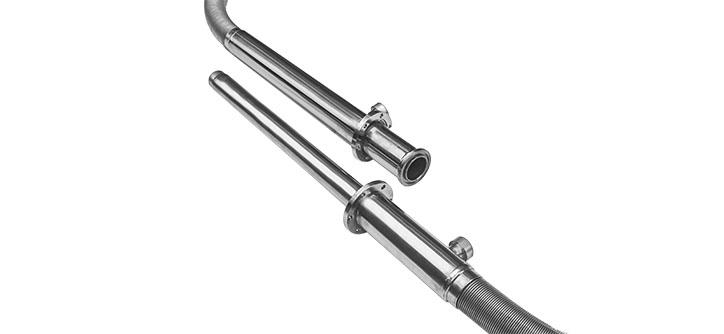
Flexible vacuum insulated hoses and piping solutions can also provide greater installation flexibility where conventional rigid piping is difficult to route. Depending on the application, these systems can be used around storage tanks, filling equipment, pumps and other cryogenic equipment.
As liquid hydrogen infrastructure develops, VIP systems will remain an important part of the equipment used to transfer and manage LH₂ safely and efficiently.
Conclusion
Liquid hydrogen requires reliable thermal management throughout storage and transfer because of its extremely low boiling temperature. Vacuum insulated pipes provide a practical method of reducing heat transfer and controlling boil-off in cryogenic hydrogen systems.
From hydrogen production and storage facilities to refueling infrastructure and aerospace launch systems, VIP technology can support the reliable transfer of liquid hydrogen. However, successful LH₂ piping design requires more than insulation alone. Vacuum performance, material selection, thermal contraction, cleanliness, leak tightness and system configuration all need to be considered as part of the overall engineering design.
Post time: Sep-30-2026


