
LN₂ Transferring: Vacuum Insulated Systems for High-Purity Liquid Nitrogen
Liquid nitrogen transfer systems are expected to do one thing extremely well: keep LN₂ cold and stable from storage tank to point-of-use. In real industrial environments, especially semiconductor and high-purity gas applications, even minor heat ingress can create vapour formation, pressure instability, or inconsistent flow conditions.
At HL Cryogenics, we design vacuum insulated pipe and flexible hose systems specifically for long-distance LN₂ transfer with minimal thermal loss. By combining dynamically maintained vacuum insulation, vacuum insulated valves, and phase separation technology, our systems are able to maintain stable single-phase liquid delivery across complex cryogenic distribution networks.
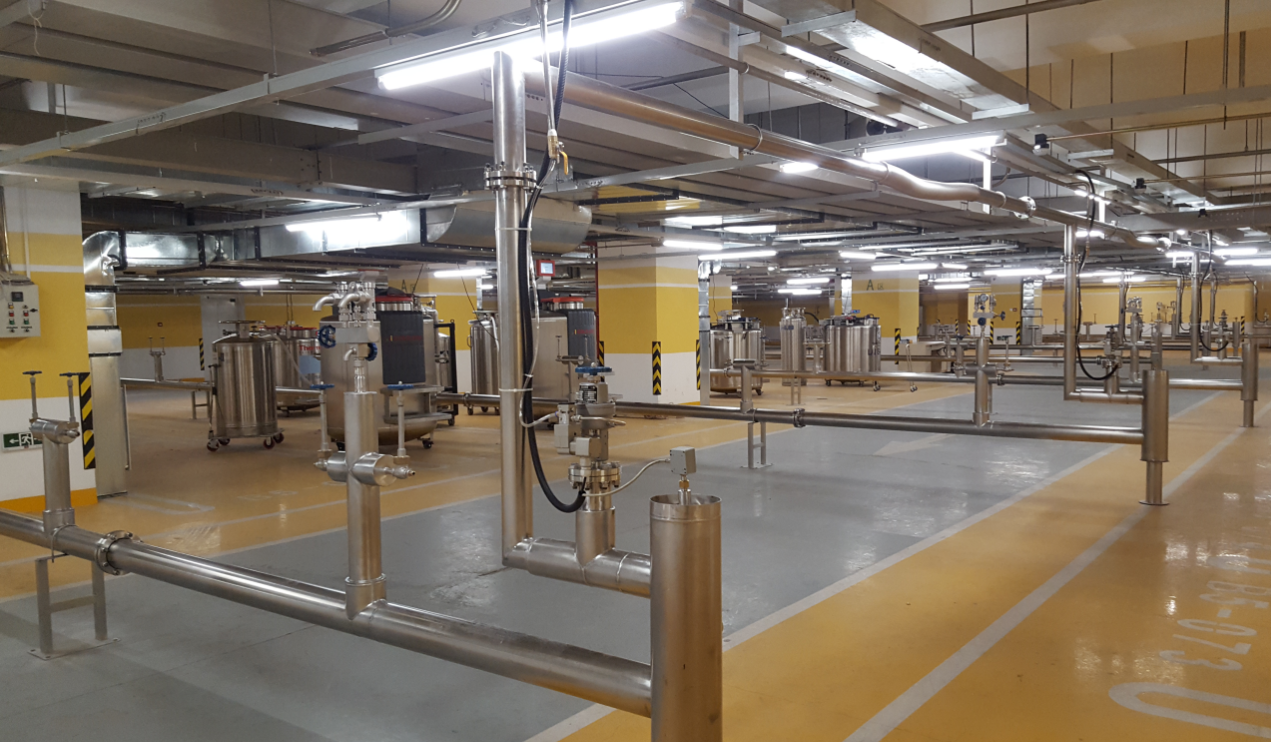
Why Vacuum Insulation Matters for LN₂ Transfer
Liquid nitrogen operates at approximately -196 °C. With ambient temperatures often above 25 °C, the temperature differential across the pipe wall can exceed 200 °C. Without effective insulation, heat rapidly enters the system through conduction, convection, and radiation, generating boil-off gas and unstable two-phase flow.
Our vacuum insulated pipe systems use a double-wall stainless steel structure with a high-vacuum annular space typically maintained below 1 × 10⁻⁵ mbar. Under this condition, gaseous conduction and convection are nearly eliminated. Multilayer insulation (MLI) further reduces radiative heat transfer by reflecting infrared energy away from the cold inner pipe.
Compared with conventional foam insulation, the effective thermal conductivity is dramatically lower, allowing LN₂ to be transferred over hundreds of metres while maintaining liquid condition and stable pressure.
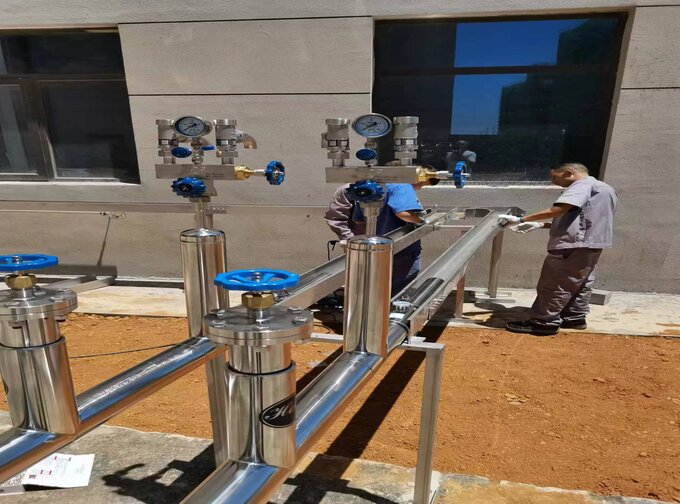
Dynamic Vacuum Pump System for Long-Term Stability
One of the common issues in cryogenic insulation is gradual vacuum degradation over time. Residual outgassing from stainless steel surfaces, insulation materials, and minor gas permeation slowly increases annulus pressure, reducing thermal performance.
To address this, HL Cryogenics integrates a Dynamic Vacuum Pump System into the transfer network. The system continuously or periodically evacuates the annular space to maintain stable vacuum conditions throughout long-term operation.
The vacuum module typically includes:
- Dry scroll or turbomolecular vacuum pumps
- Vacuum monitoring gauges
- Molecular sieve adsorption units
- Isolation and non-return valves
This active vacuum maintenance approach keeps insulation performance consistent over years of operation and is particularly important in semiconductor facilities where LN₂ temperature stability directly affects process repeatability.
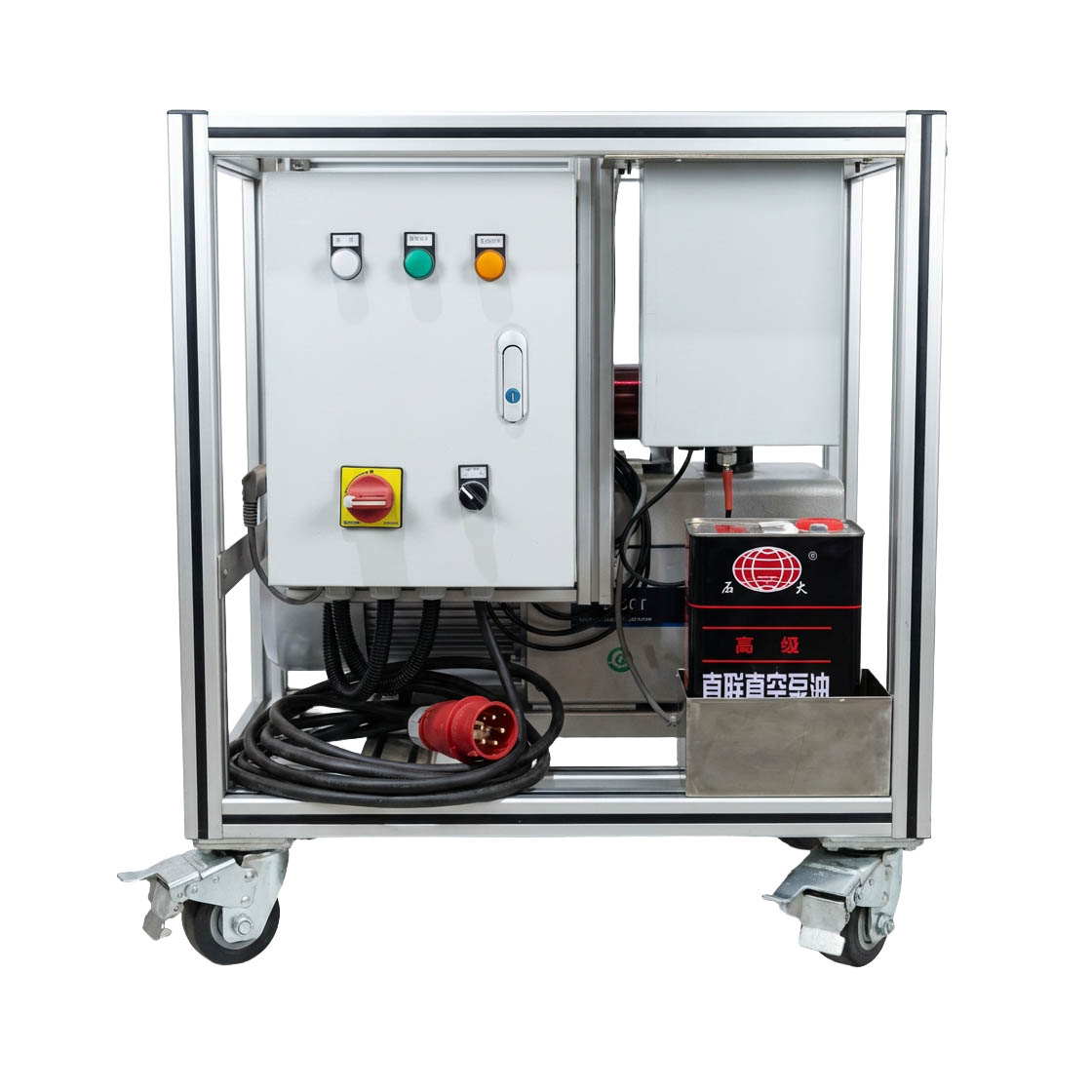
Stable Single-Phase Delivery with Vacuum Insulated Valves and Phase Separators
In cryogenic transfer systems, maintaining single-phase liquid flow is critical. Vapour pockets inside the pipeline can lead to unstable flow, cavitation, pressure fluctuation, and reduced process reliability.
Our vacuum insulated valves are designed with extended vacuum-jacketed bonnets to minimise local heat ingress around the valve body. Stem packing is positioned outside the cryogenic zone to prevent freezing and ensure reliable operation during repeated cycling.
Downstream, vacuum insulated phase separators remove entrained vapour generated during transfer. LN₂ enters the separator tangentially, allowing gas and liquid phases to separate efficiently before the liquid continues downstream.
This combination helps maintain stable pressure and ensures downstream equipment receives clean, subcooled liquid nitrogen.
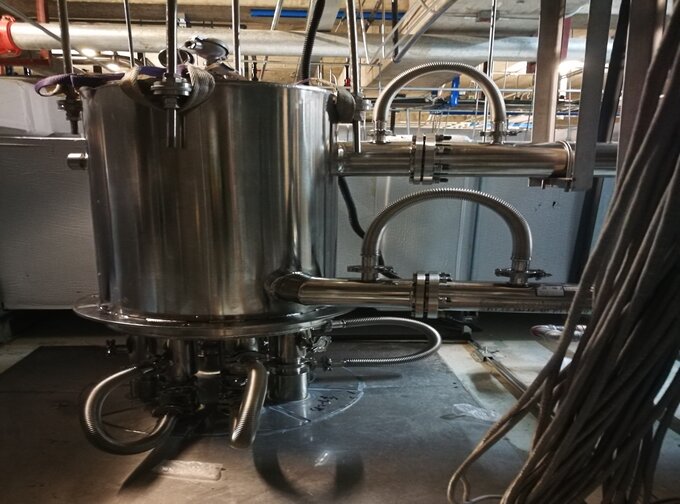
Mini Tank Integration for Distributed LN₂ Networks
For facilities with fluctuating demand or multiple point-of-use stations, intermediate buffering can significantly improve system stability.
Our Mini Tank series, ranging from 100 L to 3 000 L, provides local LN₂ storage close to process equipment. Each tank uses vacuum insulation and low-conductivity internal supports to minimise self-pressurisation and thermal loss.
In practical operation, Mini Tanks help:
- Absorb pressure fluctuations
- Handle peak consumption periods
- Reduce load on the main supply system
- Improve stability near sensitive equipment
This configuration is widely used in semiconductor fabs, laboratories, and industrial gas distribution systems.
System Performance and Engineering Design
A typical HL Cryogenics LN₂ transfer system operates between 3 and 10 bar with flow velocities up to 8 m/s.
Rigid vacuum insulated pipe is normally used for long straight runs, while vacuum insulated flexible hose sections are installed at equipment connections, expansion joints, or areas requiring movement compensation.
Under stable operating conditions, overall heat leak can be reduced to approximately 0.25–0.5 W/m depending on line configuration. In many projects, this allows liquid nitrogen to travel several hundred metres with negligible vapour generation.
Flexible hose sections use corrugated 316L stainless steel inner cores combined with external reinforcement braids for pressure resistance and long service life.
Semiconductor Fab Application in East Asia
A semiconductor manufacturer in Taiwan upgraded its existing LN₂ distribution system after experiencing vapour instability in mechanically insulated pipelines.
HL Cryogenics supplied a hybrid transfer solution consisting of:
- Vacuum insulated pipe for the main distribution corridor
- Vacuum insulated flexible hose at tool connection points
- Centralized dynamic vacuum pumping
- Vacuum insulated phase separators at each production bay
Following installation, measured system heat leak stabilized at approximately 0.27 W/m, and the facility eliminated LN₂-related production interruptions during continuous operation.
Compliance and Global Applications
HL Cryogenics systems are designed in accordance with major international cryogenic standards, including:
- ASME B31.3
- EN 13480
- ISO 21013
- BS 6364
Our vacuum insulated transfer systems are currently used across a wide range of industries, including:
- Semiconductor manufacturing
- Industrial gas distribution
- Food freezing systems
- LNG infrastructure
- Hydrogen pilot projects
- Laboratory cryogenic networks
The same vacuum insulation principles used for LN₂ can also be adapted for liquid oxygen, liquid argon, LNG, and liquid hydrogen applications.
Partner with HL Cryogenics
Reliable LN₂ transfer requires more than simply adding insulation around a pipe. Long-term thermal stability depends on vacuum integrity, phase control, proper system layout, and cryogenic-specific engineering.
At HL Cryogenics, we provide complete vacuum insulated transfer solutions including vacuum insulated pipe, flexible hose, valves, phase separators, and Mini Tanks designed for stable cryogenic performance over decades of operation.
If you are planning a new LN₂ distribution network or upgrading an existing cryogenic system, our engineering team can provide heat leak analysis and customised system recommendations tailored to your application.
Post time: May-29-2026


