
Vacuum jacketed pipelines play a crucial role in hydrogen and helium projects. When you’re working with temperatures as low as -253°C for liquid hydrogen or -269°C for liquid helium, regular insulation just doesn’t cut it — it can’t keep out enough heat. That’s where vacuum insulation steps in. It slashes heat transfer, boosts cryogenic transfer efficiency, and keeps the system running reliably over the long haul.
We don’t just stop at one layer of protection. Our vacuum insulated pipe solutions bring together advanced vacuum technology, quality materials, and smart engineering to tackle the toughest cryogenic projects out there. By combining vacuum insulated pipe with dynamic vacuum pump systems, vacuum insulated valves, and phase separators, we help clients build cryogenic systems that are safer and more efficient, no matter where they are.
When you’re dealing with ultra-cold temperatures, heat management takes center stage. Hydrogen and helium boil at extremely low temperatures, and even a little extra heat leads to evaporation, pressure spikes, and run-to-run instability. Traditional foam-insulated pipes help a bit by reducing conduction and convection, but they can’t block all the heat getting through. Vacuum insulated pipes take it further — the vacuum layer between the inner and outer pipes nearly wipes out conduction and convection, and multilayer insulation (MLI) keeps radiation heat transfer at bay.
At HL Cryogenics, we design and build advanced vacuum jacketed systems for hydrogen, helium, LNG, liquid nitrogen, and industrial gas projects. Our lineup includes everything from vacuum insulated pipe and flexible hose to dynamic vacuum pump systems, vacuum insulated valves, phase separators, and mini tanks. If you need reliable, high-performance cryogenic solutions, we’ve got you covered.

Phase Separator

Vacuum Insulated Pipe

Vacuum Insulated Flexible Hose

Vacuum Insulated Shut-off Valve
Table of Contents
1. Engineering Principles Behind Vacuum Insulation Performance
2. Maintaining Long-Term Vacuum Stability with Dynamic Vacuum Pump System
3. Manufacturing Standards and Global Cryogenic Applications
4. Improving Cryogenic Transfer Reliability
● Engineering Principles Behind Vacuum Insulation Performance
Vacuum insulation is all about keeping heat out. Heat sneaks in three ways: conduction, convection, and radiation. When you hold a solid vacuum inside the jacket—keeping those gas molecules almost motionless—you really cut down on both convection and gas conduction.
In high-performance cryogenic systems, staying in that sweet spot of 10⁻³ to 10⁻⁵ mbar for vacuum levels makes a big difference. The lower the pressure, the better you insulate, which means you lose less liquid during long runs.
We build our cryogenic pipes and hoses with tough, carefully chosen stainless steel, smartly designed vacuum spaces, and layered insulation. Every material we pick has to handle mechanical stress, keep expansion under control, resist corrosion, and work well with all sorts of cryogenic liquids—whether that's hydrogen, helium, nitrogen, oxygen, or LNG.
● Maintaining Long-Term Vacuum Stability with Dynamic Vacuum Pump System

Long-term vacuum stability pretty much decides how well a cryogenic transfer system holds up over the years. Even when you build things right, you still get a bit of gas escaping from materials, tiny leaks, and some moisture sneaking in—all of which slowly eat away at vacuum performance.
That’s where our Dynamic Vacuum Pump System steps in. It keeps an eye on vacuum levels inside the jacket space non-stop and handles gas removal automatically. So instead of waiting for the vacuum to degrade and then scrambling to fix it, the system keeps things steady and efficient all on its own.
This matters a lot for hydrogen and helium projects, semiconductor plants, and big industrial gas operations—basically anywhere you can’t afford downtime. The Dynamic Vacuum Pump System makes the insulation work like it’s supposed to, so you lose less product and the whole system stays reliable.
Of course, good insulated pipes aren’t enough. For a cryogenic transfer system to run smoothly, you need solid control and separation components working together.
Our Vacuum Insulated Valve tackles this head-on. It cuts heat transfer at critical spots—the valve body and connection points—while still giving you the control you need. Unlike regular valves, vacuum insulated ones cut out thermal bridges, which bumps up your energy efficiency.
And for separation needs, our Vacuum Insulated Phase Separator keeps liquid and gas nicely separated during transfer. That matters if you’re running hydrogen, helium, or liquid nitrogen—the quality of your liquid stream affects everything downstream.
If your needs are a little smaller, our Mini Tank solutions give you compact cryogenic storage that still brings the high vacuum insulation performance you want. So, whatever the scale, you’re covered.
● Manufacturing Standards and Global Cryogenic Applications
At HL Cryogenics, we build cryogenic equipment to meet global standards. We carry ASME, CE, and ISO certifications, which means we can design and manufacture products that fit different countries’ regulations and match what our customers need.
Our engineers stay on top of international standards—ASME, EN, and ISO quality systems—to make sure what we deliver is not only reliable but a perfect fit for EPC contractors, engineering firms, and industrial gas suppliers everywhere.
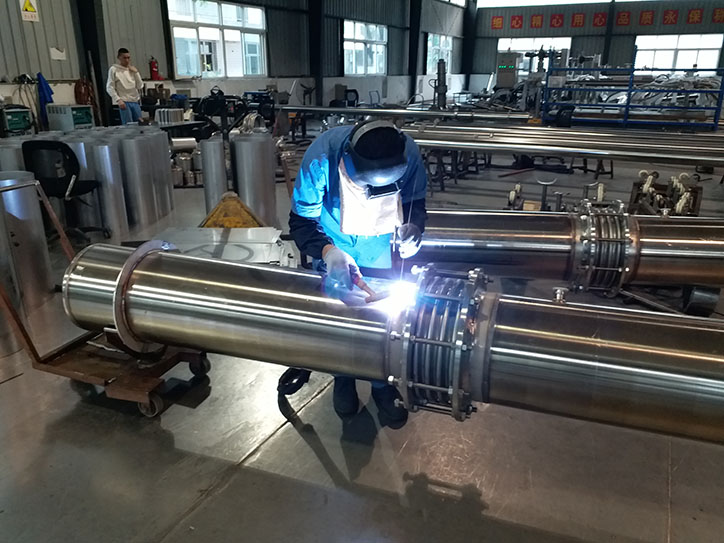
Our Vacuum Insulated Pipe and cryogenic hoses are already running in LNG terminals around Southeast Asia, semiconductor facilities in East Asia, industrial gas plants in Europe, and hydrogen projects in the Middle East. So, wherever your project is, chances are we’ve got something made for it.
● Improving Cryogenic Transfer Reliability
One customer had a pretty challenging request: they needed a long-distance liquid nitrogen pipeline, with strict limits on heat loss and nonstop operation. Their initial design ran into trouble with evaporation losses and keeping the vacuum stable.
So we created a custom Vacuum Insulated Pipe system, added real-time vacuum monitoring, and fine-tuned the insulation. Once everything was installed, their system ran smoothly, and heat loss dropped way below what you get with standard insulated lines.
This isn’t just about insulation—the vacuum jacketed technology delivers a comprehensive engineering solution that boosts efficiency and reliability for cryogenic setups.
When you’re working with hydrogen, helium, LNG, or any industrial gases, you need precision engineering, dependable manufacturing, and systems built to last. That’s where HL Cryogenics steps in. Our team brings decades of know-how and cutting-edge production skills to the table, offering specialized Vacuum Insulated Pipe, flexible hose options, and turnkey cryogenic transfer systems.
From design to build, testing, and ongoing support, our experts partner with you every step of the way—making sure your system fits your needs and meets international standards.
If you’re planning a project in hydrogen, helium, LNG, semiconductors, or industrial gases, reach out to HL Cryogenics. We’ll help you customize a vacuum jacketed pipeline that’s perfect for your application.
● FAQS
Since 1992, HL Cryogenics has specialized in the design and manufacturing of high-vacuum insulated cryogenic piping systems and related support equipment, tailored to meet diverse customer needs. We hold ASME, CE, and ISO 9001 certifications, and have provided products and services to many well-known international enterprises. Our team is sincere, responsible, and committed to excellence in every project we undertake.
Vacuum Insulated/Jacketed Pipe
Vacuum Insulated/Jacketed Flexible Hose
Phase Separator / Vapor Vent
Vacuum Insulated (Pneumatic) Shut-off Valve
Vacuum Insulated Check Valve
Vacuum Insulated Regulating Valve
Vacuum Insulated Connectors for Cold Boxes & Containers
MBE Liquid Nitrogen Cooling Systems
Other cryogenic support equipment related to VI piping — including but not limited to safety relief valve groups, liquid level gauges, thermometers, pressure gauges, vacuum gauges, and electric control boxes.
We are happy to accommodate orders of any size — from single units to large-scale projects.
HL Cryogenics' Vacuum Insulated Pipe (VIP) is manufactured in accordance with the ASME B31.3 Pressure Piping Code as our standard.
HL Cryogenics is a specialized vacuum equipment manufacturer, sourcing all raw materials exclusively from qualified suppliers. We can procure materials that meet specific standards and requirements as requested by customers. Our typical material selection includes ASTM/ASME 300 Stainless Steel with surface treatments such as acid pickling, mechanical polishing, bright annealing, and electro polishing.
The size and design pressure of the inner pipe are determined according to the customer's requirements. The size of the outer pipe follows HL Cryogenics' standard specifications, unless otherwise specified by the customer.
Compared with conventional piping insulation, the static vacuum system provides superior thermal insulation, reducing gasification losses for customers. It is also more cost-effective than a dynamic VI system, lowering the initial investment required for projects.
● Related Posts



Post time: Jul-31-2026


