
You really can’t judge a Vacuum Insulated Pipe system just by how it looks, how thick the walls are, or how much it costs. At HL Cryogenics, we’ve seen that the real signs of quality are things like how well it handles heat leak, how stable the vacuum stays over time, smart engineering, seamless integration, and whether it actually meets cryogenic standards. If the system’s built right, it’ll keep thermal efficiency up and stay reliable year after year. If not, you’ll notice more heat leaks, rising losses, and reliability slipping much sooner than you’d expect.
The whole point of a Vacuum Insulated Pipe system is to keep heat from sneaking into the cryogenic fluid. So, procurement teams shouldn’t just ask “What vacuum level can you hit?” The real question is, “How well can you control heat leak?”
Inside a cryogenic pipe, heat sneaks through in three ways: thermal radiation, leftover gas conduction, and solid conduction through the supports. You need to tackle all of them if you want to reduce heat leak. If a supplier talks up hitting a great vacuum but ignores radiation shields, multilayer insulation, or support design, you’re probably going to get lackluster performance once the system is up and running.
Here at HL Cryogenics, we focus on actual thermal efficiency, not just impressive vacuum numbers. That’s the metric that really tells you how a cryogenic transfer system will work in real-world settings—industrial gases, liquid nitrogen setups, LNG, even hydrogen.
With long cryogenic pipelines, even a tiny uptick in heat leak means way more product evaporating and higher costs. That’s why proven thermal performance should always be front and center when you’re sizing up system quality.
Table of Contents
1. Assess Long-Term Vacuum Stability and Dynamic Vacuum Control
2. Examine System Integration Beyond the Vacuum Insulated Pipe
3. Verify Engineering Standards, Materials, and Real-World Performance
4. Focus on Lifecycle Reliability Rather Than Initial Cost
● Assess Long-Term Vacuum Stability and Dynamic Vacuum Control
A lot of vacuum insulated piping systems work great right out of the factory, but over time, they start losing their edge as the vacuum degrades. That slow decline is easy to miss when you’re choosing a supplier, but it matters more than you’d think.
The truth is, a vacuum space isn’t frozen in time. Things like outgassing, material permeation, temperature swings, and just the daily grind all chip away at the vacuum’s quality. As that happens, more gas starts moving around inside, and you lose the insulation that kept everything humming along in the first place.
So, when it comes down to it, long-term vacuum stability beats out whatever numbers they hit at the start. That’s why, at HL Cryogenics, we built the Dynamic Vacuum Pump System. Instead of just sealing everything up and crossing our fingers, our system actively keeps the vacuum strong, day in and day out.
What does that mean for you? You get consistently good insulation, less maintenance hassle, quick warnings if the vacuum starts slipping, better reliability over time, and—here’s the kicker—lower total cost to run the thing.
We’ve seen this make a real difference in LNG terminals in Southeast Asia, gas plants across Europe, and semiconductor fabs in East Asia. All places where you can’t afford a drop in thermal performance or surprise downtime.
Bottom line: when you’re picking a supplier, don’t just ask how they pull off the vacuum at the factory. Make them show you how they’ll keep it working, long after install day. That’s what really counts.
●Examine System Integration Beyond the Vacuum Insulated Pipe
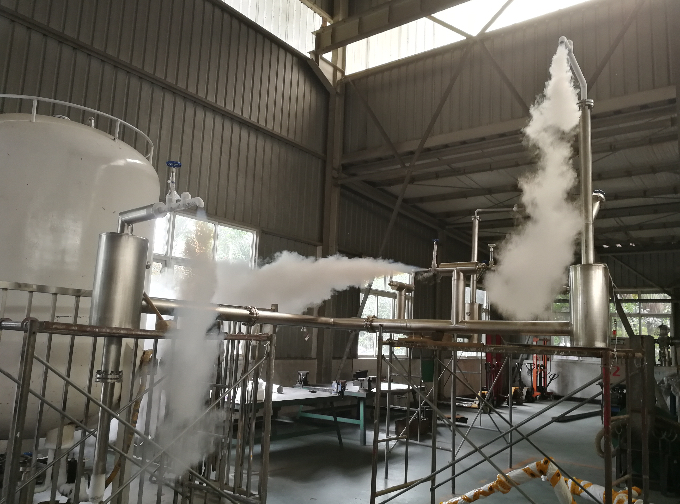
By combining our Dynamic Vacuum Pump System, Vacuum Insulated Valve, and Phase Separator, we give you a setup that moves liquid helium efficiently and keeps costs down. Our Mini Tanks and Flexible Hoses let us handle both mobile and fixed jobs with precision.
A good cryogenic transfer system is about a lot more than just the pipe. The real test is how all the parts work together as one system.
When you look at real-world setups, most of the unwanted heat sneaks in at connection points, valves, flexible hose sections, and where you handle phase control—not along the straight pipe. So, it pays to check if your supplier can bring the whole package, including:
- Vacuum insulated flexible hose
- Vacuum insulated valves
- Vacuum insulated phase separators
- Mini tanks
- Vacuum monitoring gear
A well-designed flexible hose should handle movement, vibration, and tricky installation spots without sacrificing thermal performance. If the hose isn’t up to standard, it can be a big source of heat leaks and headaches later on.
Vacuum insulated valves matter just as much. They do a much better job limiting heat transfer at certain spots than regular valves. With large liquid nitrogen systems, these small losses add up fast and can drag down efficiency.
Don’t overlook the vacuum insulated phase separator either. By managing the liquid and vapor phases inside your transfer system, it keeps your process running smoothly and shields equipment further down the line from unwanted swings.
In the end, choosing a supplier who delivers an integrated system is just smarter. You’ll get better long-term reliability than you would from someone who’s only focused on making pipe.
● Verify Engineering Standards, Materials, and Real-World Performance
Material selection and engineering compliance are fundamental indicators of quality.
For most cryogenic pipe systems, stainless steels such as 304L and 316L are commonly selected due to their excellent cryogenic toughness and weldability. However, material selection should always be matched to operating pressure, process media, and environmental conditions.
Depending on the application, cryogenic systems may operate from vacuum conditions up to pressures exceeding 40 bar. Proper engineering analysis is therefore essential.
A reliable supplier should demonstrate compliance with recognized cryogenic engineering standards such as:
- ASME B31.3
- ASME pressure vessel requirements
- EN standards
- ISO quality management systems
Beyond documentation, procurement teams should seek evidence of successful field installations.
For example, a cryogenic transfer system supporting an LNG terminal in Southeast Asia faces different operational challenges than a hydrogen project in the Middle East or a semiconductor facility in East Asia. Real-world project experience demonstrates that the supplier can adapt engineering solutions to diverse operating environments.
At HL Cryogenics, our experience across industrial gas applications, LNG infrastructure, semiconductor manufacturing, and energy projects provides valuable engineering feedback that continuously improves system design and reliability.
● Focus on Lifecycle Reliability Rather Than Initial Cost
One of the most common procurement mistakes is evaluating Vacuum Insulated Pipe systems primarily on purchase price.
In reality, the largest costs associated with cryogenic infrastructure typically occur after installation. Product losses, maintenance interventions, vacuum degradation, and operational downtime often exceed initial procurement savings.
We recently supported an industrial gas customer that experienced increasing nitrogen consumption despite no apparent process changes. Investigation revealed gradual vacuum degradation in the existing piping system. After replacing the network with a fully integrated cryogenic transfer system incorporating Vacuum Insulated Pipe, Vacuum Insulated Flexible Hose, Vacuum Insulated Valve assemblies, and Dynamic Vacuum Pump System technology, the customer achieved significantly improved thermal efficiency and reduced operating costs.
This example illustrates why lifecycle performance should always be prioritized over initial capital expenditure.
When evaluating quality, procurement teams should focus on five critical questions:
- What heat leak performance can be demonstrated?
- How is long-term vacuum stability maintained?
- Is the entire cryogenic transfer system engineered as one solution?
- Which cryogenic engineering standards are followed?
- What operational evidence supports long-term reliability?
By focusing on these factors, buyers can significantly reduce project risk and improve total lifecycle value.
At HL Cryogenics, we believe that the highest-quality Vacuum Insulated Pipe systems are those that continue delivering reliable thermal performance years after installation. For organizations planning new liquid nitrogen system, LNG infrastructure, hydrogen, or industrial gas applications, we welcome the opportunity to discuss customized cryogenic engineering solutions tailored to specific project requirements.
● FAQS
Since 1992, HL Cryogenics has specialized in the design and manufacturing of high-vacuum insulated cryogenic piping systems and related support equipment, tailored to meet diverse customer needs. We hold ASME, CE, and ISO 9001 certifications, and have provided products and services to many well-known international enterprises. Our team is sincere, responsible, and committed to excellence in every project we undertake.
Vacuum Insulated/Jacketed Pipe
Vacuum Insulated/Jacketed Flexible Hose
Phase Separator / Vapor Vent
Vacuum Insulated (Pneumatic) Shut-off Valve
Vacuum Insulated Check Valve
Vacuum Insulated Regulating Valve
Vacuum Insulated Connectors for Cold Boxes & Containers
MBE Liquid Nitrogen Cooling Systems
Other cryogenic support equipment related to VI piping — including but not limited to safety relief valve groups, liquid level gauges, thermometers, pressure gauges, vacuum gauges, and electric control boxes.
We are happy to accommodate orders of any size — from single units to large-scale projects.
HL Cryogenics' Vacuum Insulated Pipe (VIP) is manufactured in accordance with the ASME B31.3 Pressure Piping Code as our standard.
HL Cryogenics is a specialized vacuum equipment manufacturer, sourcing all raw materials exclusively from qualified suppliers. We can procure materials that meet specific standards and requirements as requested by customers. Our typical material selection includes ASTM/ASME 300 Stainless Steel with surface treatments such as acid pickling, mechanical polishing, bright annealing, and electro polishing.
The size and design pressure of the inner pipe are determined according to the customer's requirements. The size of the outer pipe follows HL Cryogenics' standard specifications, unless otherwise specified by the customer.
Compared with conventional piping insulation, the static vacuum system provides superior thermal insulation, reducing gasification losses for customers. It is also more cost-effective than a dynamic VI system, lowering the initial investment required for projects.
● Related Posts



Post time: Jun-10-2026


