
Why Vacuum Insulated Hoses Matter in Liquid Hydrogen Transfer
Liquid hydrogen (LH2) must be maintained at approximately −253°C under suitable operating conditions. At such an extremely low temperature, even a small amount of heat entering the transfer system can cause liquid boil-off and increase operating losses.
Vacuum insulated hoses are designed to reduce heat transfer during cryogenic liquid handling. They are particularly relevant where flexible connections are needed between storage tanks, transfer lines, filling equipment, and other components in a liquid hydrogen system.
Unlike conventional cryogenic hoses, a vacuum insulated hose uses an evacuated space between its inner and outer structures to limit heat transfer. This design helps maintain stable operating conditions during transfer and can reduce heat ingress compared with non-vacuum-insulated alternatives.
How Vacuum Insulated Hose Technology Works
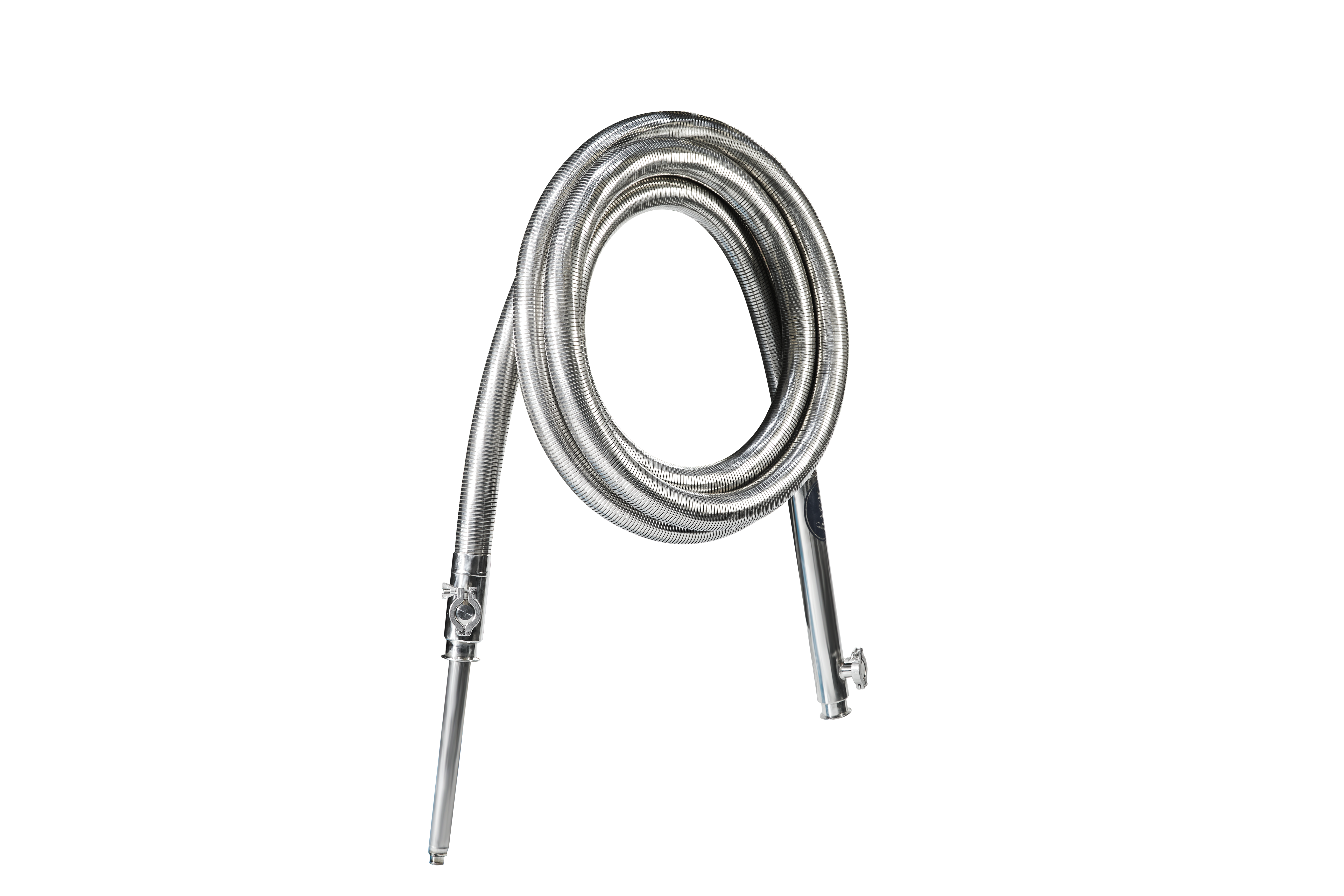
A typical vacuum insulated hose consists of an inner pipe or flexible metal tube, an outer protective jacket, and an insulating annular space maintained under vacuum. The inner tube carries the liquid hydrogen, while the outer structure protects the assembly and helps maintain the vacuum insulation system.
The vacuum reduces heat transfer through the gas within the annular space. Depending on the design, additional insulation materials and low-conductivity supports may be used to further limit thermal losses.
Several factors influence the performance of a vacuum insulated hose:
- Vacuum integrity: Maintaining the required vacuum level is essential for effective thermal insulation.
- Material selection: Materials must be suitable for cryogenic temperatures, pressure conditions, and the intended hydrogen service.
- Flexible construction: The hose must accommodate the required movement and installation geometry without compromising its structural integrity.
- Connection design: End fittings and connections must be compatible with the system’s operating pressure, temperature, and sealing requirements.
These factors should be evaluated together when selecting a hose for liquid hydrogen service.
Key Applications in Liquid Hydrogen Systems
Liquid Hydrogen Storage and Transfer
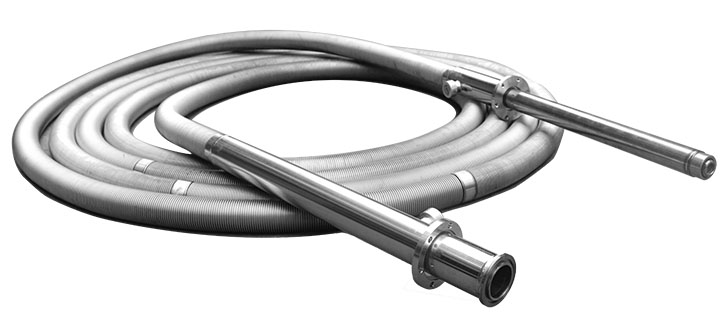
Vacuum insulated hoses can provide flexible connections between storage vessels and transfer equipment. Their insulation helps limit heat ingress during liquid hydrogen loading, unloading, and transfer operations.
The suitability of a particular hose depends on the required flow rate, operating pressure, transfer duration, connection arrangement, and allowable heat leak.
Hydrogen Refueling Infrastructure
As liquid hydrogen becomes a potential option for supplying hydrogen to selected transport and industrial applications, specialized transfer equipment is needed throughout the supply chain.
Vacuum insulated hoses may be used in suitable liquid hydrogen handling and refueling systems where flexibility is required. However, the hose assembly must be specifically designed and qualified for LH2 service. Equipment intended for liquid nitrogen or liquid oxygen should not automatically be assumed suitable for liquid hydrogen.
Aerospace and Launch Facilities
Liquid hydrogen is used as a rocket propellant in certain launch systems. Ground support equipment must transfer and manage the cryogenic fuel while controlling heat ingress and maintaining the required operating conditions.
Vacuum insulated hoses may be considered for flexible connections in compatible ground support systems. Their use depends on the specific system design, operating requirements, and applicable safety standards.
Research and Industrial Facilities
Research laboratories and hydrogen technology development facilities may require flexible connections between liquid hydrogen storage equipment, experimental apparatus, and transfer systems.
In these applications, vacuum insulated hoses can help reduce heat transfer while accommodating equipment layouts that would be difficult to serve with rigid piping alone.

What to Consider When Selecting a Liquid Hydrogen Hose
Selecting a vacuum insulated hose for liquid hydrogen requires more than checking its nominal diameter. The complete assembly must be evaluated for its intended operating conditions.
Operating temperature and pressure
The hose, fittings, seals, and connected components must be suitable for the specified liquid hydrogen temperature and pressure range.
Heat leak and boil-off
Thermal performance affects liquid loss, transfer efficiency, and operating requirements. Heat-leak data should be assessed under clearly defined test conditions.
Flexibility and installation
Bend radius, hose length, movement requirements, connection orientation, and external mechanical loads all influence the suitability of the assembly.
Hydrogen compatibility and safety
Materials, joints, seals, and manufacturing procedures must be assessed for hydrogen service. The design should also address leakage risks, pressure relief, and other hazards associated with cryogenic hydrogen.
Inspection and maintenance
Vacuum integrity and overall hose condition are important throughout the service life. Inspection intervals and maintenance procedures should follow the manufacturer’s recommendations and applicable requirements.
The Role of Vacuum Insulated Hoses in Future Hydrogen Infrastructure
The development of liquid hydrogen supply chains will require reliable equipment for storage, transportation, and transfer. Vacuum insulated hoses can contribute to these systems by combining thermal insulation with the flexibility needed at selected connection points.
As liquid hydrogen applications expand, manufacturers and system integrators will need to pay closer attention to insulation performance, hydrogen compatibility, mechanical reliability, and application-specific qualification.
The most appropriate solution is not necessarily the hose with the lowest nominal heat leak or the greatest flexibility. It is the assembly that meets the actual operating requirements of the complete system.

Conclusion
Vacuum insulated hoses provide a practical option for flexible connections in liquid hydrogen transfer systems. By limiting heat ingress, they can help control boil-off and support efficient cryogenic operations.
Successful application depends on selecting equipment specifically designed for liquid hydrogen, with verified thermal performance, suitable materials, and appropriate pressure and safety ratings.
For engineers and system designers, evaluating the hose as part of the complete liquid hydrogen transfer system is essential to achieving reliable long-term performance.
Post time: Oct-23-2026


