
Introduction
Cryogenic liquids such as liquid nitrogen (LN₂), liquid oxygen (LOX), liquid argon (LAr), liquefied natural gas (LNG), and liquid hydrogen (LH₂) play a critical role in industries ranging from industrial gas production and biotechnology to semiconductor manufacturing, aerospace, and clean energy.
One common challenge across all these applications is maintaining extremely low temperatures during transfer. Without adequate insulation, heat from the surrounding environment quickly enters the system, causing product loss through vaporization and reducing overall process efficiency.
To address this challenge, most modern cryogenic facilities rely on vacuum insulated pipelines (VIPs), also known as vacuum jacketed pipes. These systems are specifically designed to minimize heat ingress and ensure efficient, reliable transfer of cryogenic liquids.
Why Cryogenic Liquid Transfer Requires Specialized Piping
Cryogenic liquids are stored at temperatures far below ambient conditions:
| Cryogenic Fluid | Boiling Point |
|---|---|
| Liquid Nitrogen (LN₂) | -196°C |
| Liquid Oxygen (LOX) | -183°C |
| Liquid Argon (LAr) | -186°C |
| LNG | -162°C |
| Liquid Hydrogen (LH₂) | -253°C |
Because the temperature difference between the fluid and the environment often exceeds 200°C, heat naturally flows into the transfer system. Even a relatively small amount of heat ingress can cause a portion of the liquid to vaporize.
This can result in:
- Increased boil-off gas (BOG)
- Product losses
- Pressure fluctuations
- Two-phase flow conditions
- Reduced process efficiency
- Higher operating costs
For applications requiring stable liquid delivery, effective thermal insulation is essential.

How Vacuum Insulated Pipelines Work
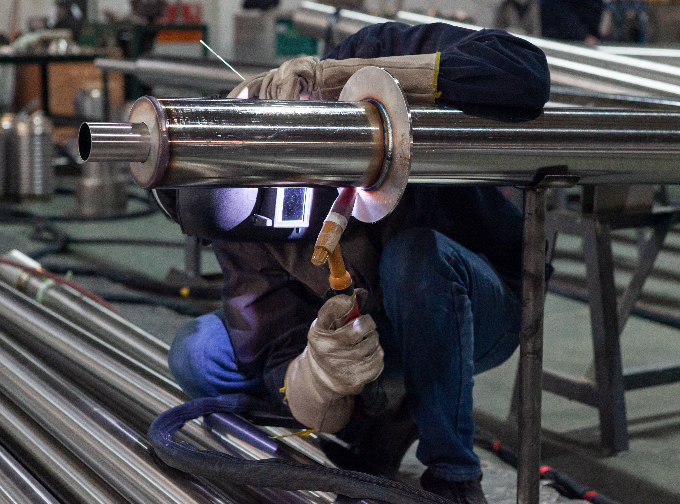
A vacuum insulated pipeline consists of two concentric stainless-steel pipes.
The inner pipe carries the cryogenic liquid, while the outer pipe forms a protective jacket. Between the two pipes is a high-vacuum annular space that acts as an effective thermal barrier.
Most high-performance systems also incorporate multilayer insulation (MLI) within the vacuum space. Together, the vacuum and MLI significantly reduce all forms of heat transfer, including conduction, convection, and radiation.
Compared with conventional foam-insulated piping, vacuum insulated pipelines dramatically reduce heat leak, helping maintain the cryogenic liquid in a stable state throughout transport.
LNG Transportation Using Vacuum Insulated Pipelines
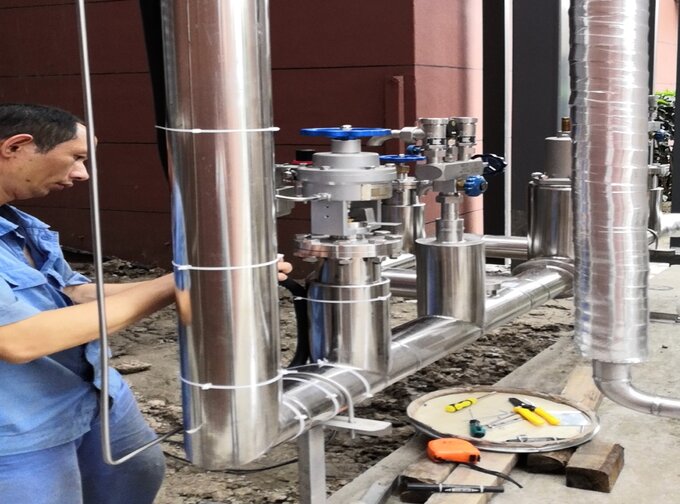
Liquefied Natural Gas (LNG) is typically stored and transported at approximately -162°C. Maintaining this temperature is critical for minimizing boil-off gas generation and ensuring efficient operations.
In LNG facilities, vacuum insulated pipelines are commonly used for:
- Storage tank connections
- Truck loading systems
- Marine bunkering facilities
- LNG transfer skids
- Regasification terminals
By reducing heat ingress, vacuum insulated pipelines help maintain LNG in its liquid state during loading, unloading, and distribution processes. Lower boil-off rates also contribute to improved operational efficiency and reduced product losses.
Liquid Hydrogen Transfer Applications
Liquid hydrogen is one of the most challenging cryogenic fluids to handle due to its extremely low boiling point of approximately -253°C.
Applications include:
- Hydrogen liquefaction plants
- Aerospace launch facilities
- Hydrogen fueling stations
- Research laboratories
- Green hydrogen infrastructure projects
Because hydrogen molecules are exceptionally small and highly mobile, maintaining insulation performance is particularly important. Vacuum insulated pipelines help minimize heat leak and reduce evaporation, making them a preferred solution for liquid hydrogen transfer systems.
Advanced designs often incorporate multilayer insulation, specialized support structures, and carefully controlled vacuum levels to achieve the required thermal performance.
Liquid Nitrogen Transfer Applications
Liquid nitrogen is widely used across numerous industries, including:
- Semiconductor manufacturing
- Biotechnology and life sciences
- Pharmaceutical production
- Food processing and freezing
- Industrial gas distribution
In these facilities, vacuum insulated pipelines transport LN₂ from bulk storage tanks to equipment and process areas throughout the plant.
The use of VIP systems helps:
- Maintain stable liquid delivery
- Reduce nitrogen consumption
- Improve process consistency
- Lower operating costs
- Minimize ice formation and maintenance requirements
For large semiconductor facilities, vacuum insulated pipelines often extend hundreds of metres to ensure a continuous supply of high-purity liquid nitrogen.
Components of a Complete Cryogenic Transfer System
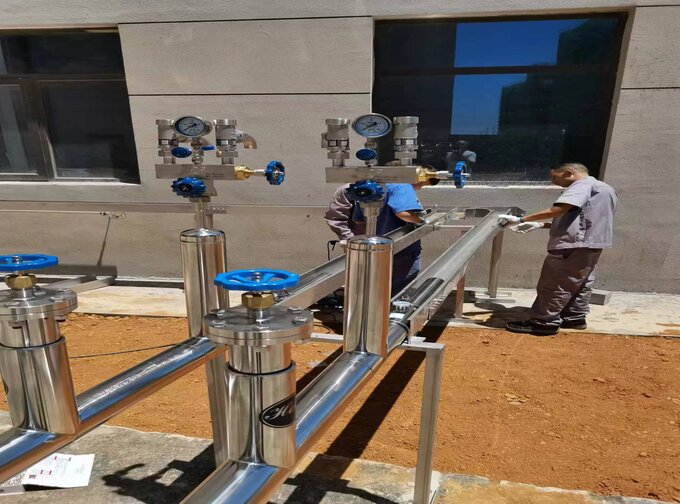
A cryogenic transfer network involves more than just insulated piping. Depending on the application, the system may also include:
- Vacuum insulated valves
- Vacuum insulated flexible hoses
- Phase separators
- Pressure control equipment
- Expansion joints
- Vacuum monitoring devices
- Dynamic vacuum maintenance systems
These components work together to ensure efficient operation, stable flow conditions, and long-term reliability.
Benefits of Vacuum Insulated Pipelines
Vacuum insulated pipelines have become the preferred solution for cryogenic liquid transfer because they offer several important advantages:
Reduced Heat Leak
The vacuum space provides excellent thermal insulation, minimizing heat transfer from the environment.
Lower Product Loss
Reduced heat ingress means less vaporization and lower boil-off rates.
Improved Process Stability
Maintaining cryogenic liquids in a single-phase state helps ensure stable pressure and flow conditions.
Increased Energy Efficiency
Less product loss translates into lower operating costs and improved system efficiency.
Long-Term Reliability
Properly designed vacuum insulated pipelines provide consistent thermal performance over many years of operation.
Conclusion
The safe and efficient transportation of cryogenic liquids depends on minimizing heat transfer throughout the transfer process. Whether handling LNG, liquid nitrogen, liquid oxygen, or liquid hydrogen, maintaining low temperatures is essential for preserving product quality and reducing operational losses.
Vacuum insulated pipelines have become the industry standard because they offer superior thermal performance, lower boil-off rates, improved efficiency, and reliable long-term operation. As demand for cryogenic applications continues to grow across energy, industrial gas, biotechnology, and semiconductor sectors, vacuum insulated pipeline technology will remain a critical part of modern cryogenic infrastructure.
Post time: Jun-18-2026


