
At HL Cryogenics, we know the semiconductor world doesn't settle for anything less than absolute precision and rock-solid thermal stability. That's why we build our modular cryogenic systems to push the limits of thermal efficiency, using advanced vacuum insulation tech that sets a new standard. When we design a Vacuum Insulated Pipe or Vacuum Insulated Flexible Hose, we're laser-focused on blocking out heat. We pull this off by using Dewar-style construction—basically, we suspend the inner carrier line inside an outer jacket with a deep vacuum in between. Once our Dynamic Vacuum Pump System evacuates that space, it forms a powerful thermal barrier. Heat just can't sneak through, so whatever cryogenic liquid you're moving—liquid nitrogen for cooling wafers, liquid oxygen for etching—it stays ice-cold across long distances.
Inside every section of our pipes and hoses, you'll find multilayer insulation: reflective aluminum foil stacked with low-conductivity spacers. That setup bounces radiant heat right back out, which matters a lot in semiconductor production, where even the tiniest temperature bump can wreck purity and cause two-phase flow.
Keeping the vacuum strong isn't a one-and-done job. Our Dynamic Vacuum Pump System keeps watch constantly, adjusting in real time to hold the vacuum steady. You get top-notch thermal performance that lasts for decades.
Handling these super-cold, sometimes tricky fluids calls for smart valves. So we use our Vacuum Insulated Valve, built with a thermal shunt and a long stem. This keeps the chilly pipe cut off from the actuator and the outside world—no ice buildup, smooth operation, no drama.

Table of Contents
1. Advanced Thermal Insulation
2. Active Vacuum Management
3. Precision Flow & Phase Control
4. Flexible Systems & Compliance
● Advanced Thermal Insulation
And about that flash gas that pops up when you move cryogenic liquids? Our Vacuum Insulated Phase Separator takes care of it. It vents gas through a vacuum-jacketed interface, making sure only pure, saturated liquid gets to where it's needed. This isn't just a nice touch—it's essential in aerospace testing and LNG terminals, where you can't afford mistakes in mass flow.
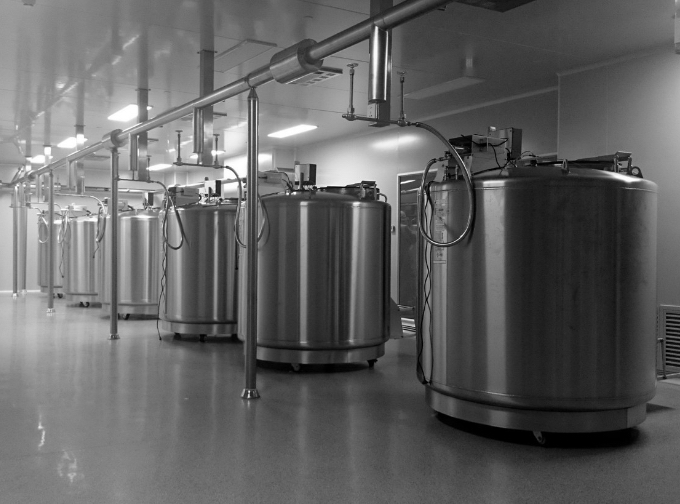
In fabs, our Mini Tank solutions team up with our Vacuum Insulated Pipe networks, giving you a cryogen buffer so you can handle peak demand without dropping pressure or stressing your hose connections.
We've put these technologies to work in some of the toughest environments out there—complex aerospace fueling, global LNG terminals—and our systems meet strict international safety codes like ASME B31.3 and PED. Every HL Cryogenics Flexible Hose gets hammered with helium leak checks and thermal cycling tests, so you know our vacuum insulation stands up to the intense expansion and contraction that comes with cryogenic work.
● Active Vacuum Management

By combining our Dynamic Vacuum Pump System, Vacuum Insulated Valve, and Phase Separator, we give you a setup that moves liquid helium efficiently and keeps costs down. Our Mini Tanks and Flexible Hoses let us handle both mobile and fixed jobs with precision.
When you pick a Vacuum Insulated Pipe from HL Cryogenics, you get a system that cuts down on liquid boil-off gas and gets the most out of your liquid nitrogen setup. We don't just talk about innovation—we build it in, linking our Dynamic Vacuum Pump System with our Vacuum Insulated Valve assemblies to create a smooth, low-maintenance setup. It simply works better than old-school foam-insulated pipes.
● Operational Safety Managed by Valve and Valve Box
It doesn't matter if you need a short cryogenic hose for a lab Mini Tank or a long, sprawling pipe network for a huge semiconductor plant—we make sure every Vacuum Insulated Phase Separator and Valve works together, ready to handle liquid nitrogen, oxygen, or even LNG, and does it all reliably. Our engineers are always tweaking and improving the Flexible Hose and pipe designs to see just how far we can push cryogenic transport. Every HL Cryogenics installation shows what we stand for: top-notch vacuum insulation tech and a real commitment to giving the semiconductor industry the safest, most advanced cryogenic hose and piping out there.
● Precision Flow & Phase Control
We build our Vacuum Insulated Valve with a special thermal break, so the actuator and stem stay at room temperature—even when the valve’s handling liquid helium or nitrogen at freezing-cold levels. This keeps the valve running smoothly and stops ice from messing with the seals or causing things to jam up. When we tie the Vacuum Insulated Valve straight into the vacuum-jacketed network, we cut out the big heat leaks you get with old-school foam insulation.
Long cryogenic piping runs into another problem: two-phase flow. To keep that under control, we use the Vacuum Insulated Phase Separator. It vents off the unwanted gas that forms as the liquid moves through the line, keeping delivery pressure steady. That way, whether you're fueling up a satellite or running a semiconductor lithography tool, your equipment gets a reliable, dense stream of liquid—just what you need for smooth operation.
Let's work together to boost your facility's thermal performance and safety. Reach out to HL Cryogenics, and let's talk about a cryogenic solution built just for you.
● FAQS
Since 1992, HL Cryogenics has specialized in the design and manufacturing of high-vacuum insulated cryogenic piping systems and related support equipment, tailored to meet diverse customer needs. We hold ASME, CE, and ISO 9001 certifications, and have provided products and services to many well-known international enterprises. Our team is sincere, responsible, and committed to excellence in every project we undertake.
Vacuum Insulated/Jacketed Pipe
Vacuum Insulated/Jacketed Flexible Hose
Phase Separator / Vapor Vent
Vacuum Insulated (Pneumatic) Shut-off Valve
Vacuum Insulated Check Valve
Vacuum Insulated Regulating Valve
Vacuum Insulated Connectors for Cold Boxes & Containers
MBE Liquid Nitrogen Cooling Systems
Other cryogenic support equipment related to VI piping — including but not limited to safety relief valve groups, liquid level gauges, thermometers, pressure gauges, vacuum gauges, and electric control boxes.
We are happy to accommodate orders of any size — from single units to large-scale projects.
HL Cryogenics' Vacuum Insulated Pipe (VIP) is manufactured in accordance with the ASME B31.3 Pressure Piping Code as our standard.
HL Cryogenics is a specialized vacuum equipment manufacturer, sourcing all raw materials exclusively from qualified suppliers. We can procure materials that meet specific standards and requirements as requested by customers. Our typical material selection includes ASTM/ASME 300 Series Stainless Steel with surface treatments such as acid pickling, mechanical polishing, bright annealing, and electro polishing.
The size and design pressure of the inner pipe are determined according to the customer's requirements. The size of the outer pipe follows HL Cryogenics' standard specifications, unless otherwise specified by the customer.
Compared with conventional piping insulation, the static vacuum system provides superior thermal insulation, reducing gasification losses for customers. It is also more cost-effective than a dynamic VI system, lowering the initial investment required for projects.
● Related Posts



Post time: Feb-27-2026


