
Pioneering Cryogenic Transfer Technology
HL Cryogenics, founded in 1992, is a premier brand affiliated with Chengdu Holy Cryogenic Equipment Co., Ltd. We are committed to the design, engineering, and manufacture of high-performance High Vacuum Insulated Cryogenic Piping Systems and related support equipment to meet the most demanding thermal management needs of global industries.
With a state-of-the-art manufacturing infrastructure spanning over 20,000 m² of factory area, our facilities include 2 administrative buildings, 2 specialized heavy fabrication workshops, 1 dedicated non-destructive examination (NDE) building, and 2 modern dormitories. Nearly 100 experienced professionals contribute their deep engineering wisdom and technical strength across various departments, from R&D to post-production support.
Over the decades, HL Cryogenic Equipment has evolved from a component manufacturer into a complete cryogenic solution provider. We possess the unique capability of "discovering customer system inefficiencies," "engineering robust solutions," and "optimizing overall system performance" to minimize heat leaks and eliminate operational downtime.


Solving Critical Pain Points: Boil-Off Gas (BOG) & Heat Ingress
Cryogenic fluids like Liquid Hydrogen (LH2), Liquid Natural Gas (LNG), Liquid Nitrogen (LN2), and Liquid Helium (LHe) are extremely sensitive to ambient thermal energy. Traditional insulation fails, leading to massive product losses.

The Cost of Inefficient Insulation
Without high-vacuum insulation, heat ingress causes rapid phase change, resulting in high Boil-Off Gas (BOG) rates, pressure build-up, and continuous venting. This is not only a significant economic loss but also a critical safety hazard, especially in hydrogen infrastructure.
Our Technology Solution
Our Vacuum Insulated Pipe (VIP) and low BOG vacuum insulated hose systems are engineered with a concentric double-pipe design. The inner line carries the cryogenic fluid, while the outer jacket forms a sealed vacuum barrier. This barrier is packed with multi-layer super-insulation (MLI) to eliminate radiative heat transfer. Key benefits include:
- 99% Reduction in Heat Leakage: Compared to conventional foam insulation.
- Zero Maintenance Vacuum Integrity: Advanced getters absorb outgassed molecules over time, ensuring a maintenance-free life cycle.
- Minimized Vaporization Loss: Dramatically reduces BOG, preserving product purity and volume during transfer.
- Customized Layouts: Tailored to fit complex facilities, integrating phase separators, vacuum-jacketed valves, and bayonet connections.
Jacketed Cryogenic Pipe Specifications
We design and manufacture vacuum jacketed piping to strict engineering standards. Below are the technical baselines for our customizable product range.
| Parameter / Specification | Liquid Nitrogen (LN2) / Argon (LAr) | Liquid Natural Gas (LNG) | Liquid Hydrogen (LH2) |
|---|---|---|---|
| Inner Pipe Sizes (DN) | DN15 to DN200 (Custom sizes up to DN500) | DN25 to DN300 | DN15 to DN150 |
| Operating Temperature | -196°C to -186°C | -162°C | -253°C |
| Design Pressure Rating | 1.6 MPa to 4.0 MPa (Custom up to 10 MPa) | 1.6 MPa to 2.5 MPa | 2.5 MPa to 4.0 MPa |
| Insulation Type | Multi-layer Super Insulation (MLI) | Multi-layer Super Insulation (MLI) | High-Density MLI with Hydrogen Getters |
| Vacuum Level (Factory Sealed) | < 1 x 10⁻³ Pa | < 1 x 10⁻³ Pa | < 1 x 10⁻⁴ Pa |
| Outgassing Prevention | Standard Molecular Sieve Getters | Standard Molecular Sieve Getters | Specialized Palladium Hydrogen Getters |
| Material of Construction | Stainless Steel 304 / 304L | Stainless Steel 304 / 316L | Stainless Steel 316L (Hydrogen embrittlement resistant) |
* Note: The above jacketed cryogenic pipe specifications represent our standard configurations. Every VIP run is fully customized using 3D modeling to accommodate thermal expansion, structural supports, and specific flow velocities.
Liquid Hydrogen Transfer Line Safety Standards
Transferring Liquid Hydrogen (LH2) at -253°C presents extreme engineering challenges. Due to hydrogen's unique properties, safety and thermal efficiency cannot be compromised. HL Cryogenics designs LH2 transfer lines to meet the most stringent international standards, including ASME B31.3 Chapter IX for high-pressure and critical cryogenic piping.
Our LH2 systems incorporate multi-barrier safety features to prevent leaks and mitigate risk:
- Double Containment: Outer vacuum jacket acts as a secondary containment line in case of inner pipe failure.
- Hydrogen Embrittlement Resistance: We utilize premium low-carbon Stainless Steel 316L for all inner lines to prevent hydrogen-induced cracking.
- Integrated Vacuum Monitoring: Optional continuous vacuum sensors and safety relief valves prevent over-pressurization of the vacuum space.
- Compliance with Codes: Designed in accordance with ISO 13984 and NFPA 2 safety standards for liquid hydrogen transfer.
Flexible vs. Rigid VIP Systems
Depending on the layout requirements, we offer both rigid vacuum insulated piping and flexible vacuum insulated hoses. Rigid lines provide the lowest possible heat leak rates, while flexible hoses are ideal for dynamic connections, vibration isolation, and challenging installation routes.
Our low BOG vacuum insulated hose utilizes a corrugated inner and outer tube design, reinforced with stainless steel braiding, maintaining high flexibility without compromising vacuum performance.
Proven Track Record & Global Collaborations
From deep space research to industrial manufacturing, HL Cryogenics is trusted by the world's most demanding organizations.
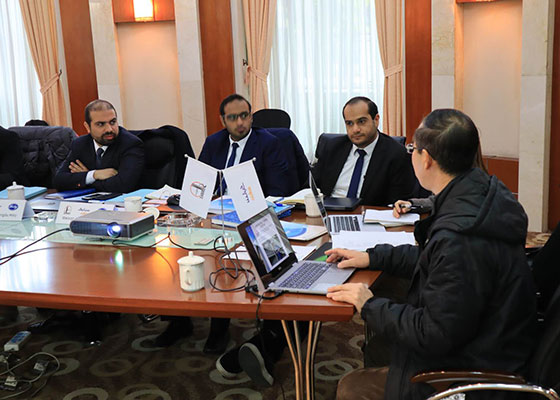
Prestigious Scientific Achievements
HL Cryogenics was selected to design and manufacture the Ground Cryogenic Support System for the Alpha Magnetic Spectrometer (AMS) installed on the International Space Station (ISS). This project was headed by Nobel laureate in physics Mr. Ting C.C. Samuel, in collaboration with the European Organization for Nuclear Research (CERN).
Industrial Partners & Sectors
We work closely with major international gas companies and global industrial leaders to deliver reliable cryogenic infrastructure:
- Industrial Gas Giants: Linde, Air Liquide, Messer, Air Products, Praxair, BOC.
- Global Corporations: Coca-Cola, Source Photonics, Osram, Siemens, Bosch, Saudi Basic Industry Corporation (SABIC), Fabbrica Italiana Automobili Torino (FIAT), Samsung, Huawei, Ericsson, Motorola, Hyundai Motor.
- Research & Academia: China Academy of Engineering Physics, Nuclear Power Institute of China, Shanghai Jiaotong University, Tsinghua University.
Empowering Our Customers with Economic Advantages
In today's rapidly changing industrial landscape, providing advanced technology while achieving significant capital and operational cost savings is our core mission. By reducing BOG, eliminating vacuum maintenance, and providing prefabricated easy-to-install VIP spools, we ensure our customers maintain a competitive advantage in their respective markets.
Technical FAQ: Vacuum Insulated Piping Systems
Find answers to key technical questions regarding the performance, lifespan, and installation of vacuum jacketed piping.


