
As semiconductor manufacturers continue to move toward advanced packaging technologies including chiplet integration, flip-chip bonding, and 3D IC architectures, the need for highly reliable cryogenic infrastructure has become more critical than ever. In this environment, systems built around HL Cryogenic vacuum jacketed pipe, insulated pipe,separator, valve, and valve box play a fundamental role in maintaining thermal precision and operational stability.
Cryogenic Control in High-Precision Packaging Lines
Modern chip packaging and testing often involve exposure to extreme temperature variations, especially during thermal cycling, reliability screening, and low-temperature characterization. The primary function of an HL Cryogenic vacuum insulated pipe is to deliver cryogenic liquid, typically liquid nitrogen, while minimizing heat ingress from the surrounding cleanroom environment.
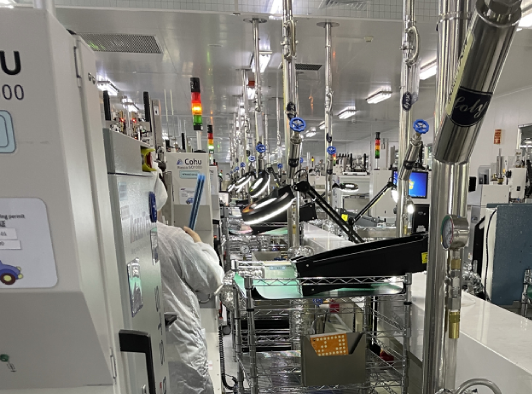
Thanks to the high vacuum level and multi-layer insulation design, the HL Cryogenic vacuum jacketed pipe system effectively suppresses heat leakage, keeping the fluid in a stable liquid phase over long distances. This ensures consistent cooling performance across multiple testing stations, eliminating temperature drift that could otherwise affect semiconductor performance data.
In fatigue-sensitive testing environments, even a minor fluctuation of temperature can influence measurement accuracy. That is why more testing facilities are shifting to HL Cryogenic vacuum insulated pipe systems as a long-term solution for stable cryogenic delivery.
Phase Stability Guaranteed by Phase Separator
During operation, part of the cryogenic liquid inevitably vaporizes as it absorbs ambient heat. An HL Cryogenic phase separator plays a crucial role by separating vapor from liquid before it reaches the critical equipment. This ensures that only subcooled liquid enters sensitive test chambers and probe stations.
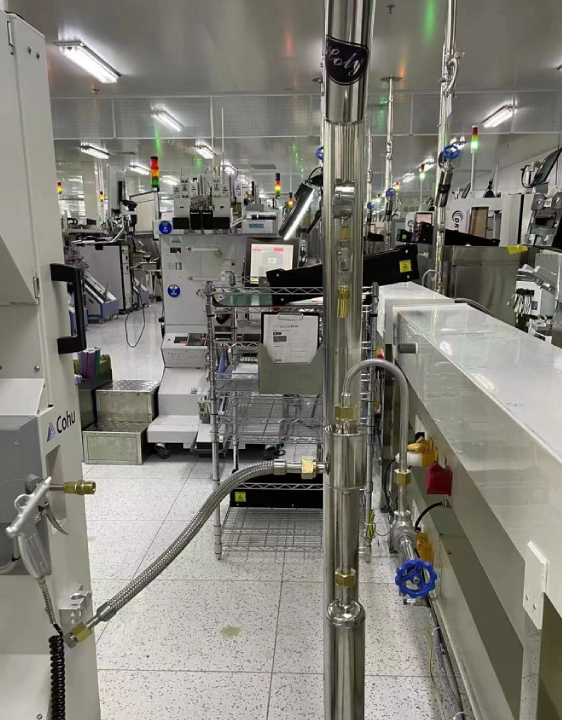
By preventing two-phase flow, the HL Cryogenic phase separator significantly improves process repeatability and protects downstream control components from flow instability. This is increasingly important as device geometries shrink and tolerance windows become smaller in advanced node technologies.
Operational Safety Managed by Valve and Valve Box
The flow and pressure of cryogenic liquids within the HL Cryogenic vacuum jacketed pipe system are regulated using specially engineered HL Cryogenic valves. These components are designed to operate reliably under ultra-low temperatures and rapid thermal transitions.
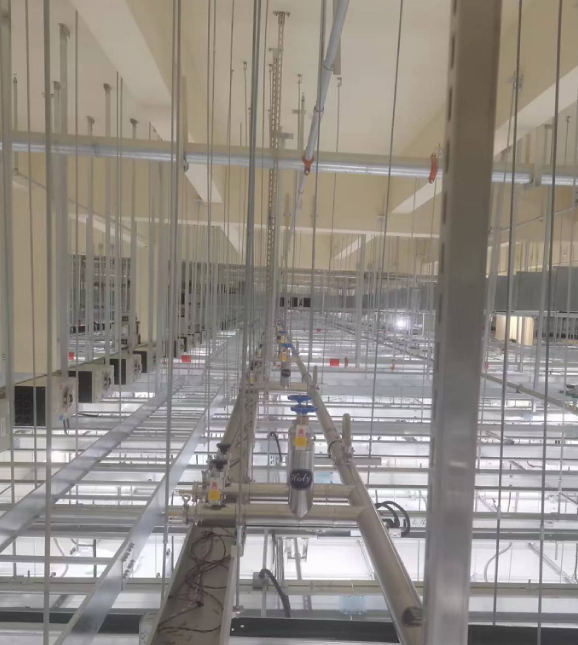
To further enhance system safety and accessibility, each HL Cryogenic valve is housed inside an insulated HL Cryogenic valve box. The valve box protects the valve from moisture ingress, reduces frost buildup, and enables technicians to perform inspections and adjustments without disrupting the thermal balance of surrounding areas.
This compact, modular configuration also aligns well with the strict spatial limitations common in semiconductor packaging plants and cleanroom environments.
A Smart Infrastructure Choice for Advanced Semiconductor Facilities
As the industry pushes toward higher integration density and more demanding testing standards, cryogenic infrastructure is no longer a secondary consideration. Semiconductor manufacturers that invest in HL Cryogenic vacuum insulated pipe, HL Cryogenic vacuum jacketed pipe, separator, valve, and valve box systems gain measurable advantages in efficiency, safety, and long-term cost control.
In competitive production environments, the stability of the cryogenic network can ultimately influence product yield, equipment lifespan, and operational consistency — making HL Cryogenic solutions an essential part of semiconductor infrastructure.
Post time: Dec-02-2025


